touch up cup shark tank

Touch Up Cup Shark Tank Update: The Deal and What Followed

Most people finish a paint job, seal the can back up, and shove it in the garage. A year later, they open it to find rust flakes, dried chunks, or paint that’s completely unusable. Jason and Carson Grill, a father and son from Cincinnati, Ohio, built a business around fixing exactly that problem.

Their product, the Touch Up Cup, went from a practical household idea to a nationally distributed brand after appearing on Shark Tank Season 12. Here’s a clear look at how the pitch went, what the deal looked like, and where the business stands now.

The Problem Behind the Product

Traditional metal paint cans rust. They’re hard to reseal properly, and the paint inside can form a thick skin or dry out between uses. For small touch-ups — a scuffed wall, a paint chip near the door frame — cracking open a gallon can feel like more work than it’s worth.

Jason and Carson’s solution is a 13 fl oz reusable container with a patented airtight seal. The design keeps paint smooth, rust-free, and odor-free between uses. The company claims paint stays fresh for up to 10 years — that’s a manufacturer claim based on the airtight design, not an independently verified figure over a full decade, so treat it accordingly.

The container also includes a built-in blending mechanism to remix paint before reuse, along with measurement markings on the side. The concept is simple: pour leftover paint in after a job, seal it, and have it ready for future touch-ups without buying a new batch or dealing with a spoiled can.

The Shark Tank Pitch — Season 12

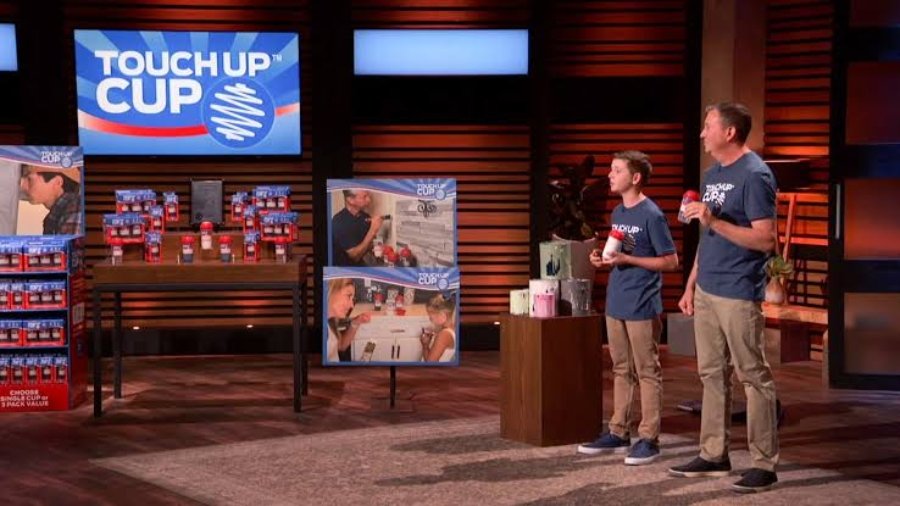
Jason and Carson appeared on Season 12 of Shark Tank. Carson was a teenager at the time, which gave the pitch a strong youth-entrepreneur angle that clearly resonated in the room.

Their original ask was $150,000 for 10% equity. During the pitch, they demonstrated the difference between paint stored in a traditional can versus paint stored in a Touch Up Cup — a straightforward visual that made the problem and solution easy to see.

They also walked through the economics: a landed cost of around $0.90 per cup, wholesale pricing of roughly $1.89 for a single cup or $4.25 for a three-pack, and a retail price range of $3.99 to $4.99. Those margins are solid for a consumer product, and the Sharks clearly noticed.

After negotiation, Jason and Carson accepted a deal from Blake Mycoskie, the founder of TOMS Shoes. The final terms: $200,000 for 25% equity. That’s more money than they asked for, but also a larger equity stake. For a young brand still building distribution, landing a well-known investor with consumer product experience was likely worth the trade-off.

Sales Growth and Business Performance After the Show

The episode airing triggered the usual Shark Tank effect — a surge in website traffic and orders in the days that followed. That’s common for products featured on the show, but sustaining it requires more than TV exposure.

According to SharkTankBlog, as of mid-2021, Touch Up Cup was on track to top $2 million in revenue for the year. HouseDigest later reported $1 million in sales for 2021 and projected over $3 million in 2022, though that 2022 figure should be treated as a projection rather than confirmed annual revenue.

The company also received an update segment in Season 13, Episode 1317, which confirmed continued growth. That kind of follow-up feature on the show is typically reserved for businesses that have made real progress since their original appearance.

Blake Mycoskie’s investment helped the founders refine operations and pursue national retail distribution. His specific day-to-day involvement in the business isn’t well-documented, so it’s fair to say he brought capital and connections without overstating his ongoing role.

Where Touch Up Cup Products Are Sold Today

The brand has built out a solid mix of direct and retail distribution. You can buy Touch Up Cup products through several channels:

  • The brand’s own website — direct-to-consumer with full product catalog
  • Walmart — broad national retail reach
  • Lowe’s — a natural fit given the home improvement audience
  • Meijer and Theisen’s — regional retail presence
  • Amazon — listed as “As Seen On Shark Tank,” available in multiple configurations including 6-packs

Their social media presence stays active with painting tips, promotions, and customer testimonials, which suggests the marketing engine is still running. That kind of consistent content is often what keeps a Shark Tank product from fading after the initial buzz.

Retailer availability can change, so if you’re trying to find the product locally, it’s worth checking the brand’s website or calling ahead to confirm current shelf placement.

How the Product Line Expanded Beyond the Original Cup

Touch Up Cup started as a single product. It’s no longer that. The company has expanded into a broader range of painting and home products, including:

  • Touch Up Cup containers in various pack sizes
  • Paint tarps, brush sets, rollers, and roller covers
  • A roller cleaner product called the Roller Saver
  • Kitchen-focused storage containers and a grease storage bag

The kitchen and grease storage products are a bit outside the core paint niche, but the overall direction makes sense. Rather than staying a one-product company, they’re positioning Touch Up Cup as a DIY and home accessories brand — which gives them more shelf real estate, more SKUs to pitch to retailers, and more reasons for customers to come back.

This kind of line extension is a common growth move for consumer product companies after an initial product gains traction. It’s not guaranteed to work, but it reduces the risk of depending entirely on one item.

What Carson Grill Is Up to Now

Carson, who was the teenage co-founder during the Shark Tank pitch, is also involved with OCD Detailing, an automotive detailing business in Cincinnati. Whether Touch Up Cup remains his primary focus is unclear — HouseDigest notes that directly. It’s possible he’s running both ventures in parallel or has shifted more attention toward the detailing business.

That ambiguity doesn’t change the company’s standing. Touch Up Cup products are still available, the retail partnerships appear intact, and the brand continues to operate. But it’s worth noting for anyone following the founders’ individual paths.

Business Lessons Worth Taking from This Story

There are a few practical takeaways here for entrepreneurs watching this kind of trajectory.

A simple product idea can scale if the pain point is real

Touch Up Cup isn’t technically complicated. It’s a well-sealed plastic container with a smart design. The business was built on identifying a genuine everyday frustration and solving it cleanly. That’s often enough.

Margins matter when you pitch investors

A landed cost of $0.90 and a retail price of $3.99–$4.99 gives the product room to work across wholesale, retail, and direct-to-consumer channels. When Jason and Carson put those numbers on the table, it made the business model legible. Investors want to see that the math works at scale.

TV exposure is a starting point, not a finish line

The Shark Tank effect is real, but short-lived on its own. The brands that keep growing after the show are the ones that use the momentum to lock in retail partnerships, build operations, and expand the product line. Touch Up Cup did that.

The story is part of the business

A father-son team, a teenage co-founder, a relatable household problem — that narrative made the pitch memorable. It’s also what drove media coverage and consumer interest after the episode aired. For entrepreneurs, that’s a reminder that who you are and why you built it matters alongside the product itself.

For more business case studies and practical advice on entrepreneurship and growth, visit Daily Business Zone.

Final Thoughts

Touch Up Cup is a straightforward example of a Shark Tank success story that held up after the cameras stopped rolling. The founders identified a real problem, built a practical product, landed a credible investor, and used that foundation to get into major retail chains.

The revenue figures from 2021 and the projected growth into 2022 suggest the business gained real traction — not just a bump from TV. The expanded product line shows they’re thinking about long-term brand building, not just riding one product’s momentum.

Whether you’re a homeowner looking for a smarter way to store leftover paint, or an entrepreneur studying how consumer product companies grow after Shark Tank, the Touch Up Cup story is worth paying attention to.

Read Also:

Ready Festive

Ready Festive Shark Tank Update: Where the Brand Stands Now

Most Shark Tank deals look good on camera. Fewer actually close after the show. And fewer still turn into businesses that keep growing years later. ReadyFestive managed to do both—and its story offers some useful lessons for anyone building a subscription-based business.

This article covers who founded ReadyFestive, what they pitched, what deal they got, how the company performed before and after the show, and how the subscription actually works for customers.

Who Founded ReadyFestive and What Problem They Were Solving

ReadyFestive was founded by Kristina Barnes and Liz Voelker, two women who wanted to celebrate the holidays without the usual chaos that comes with it.

The problem they identified is real and relatable. Decorating for holidays means multiple store trips, mismatched items, second-guessing color schemes, and doing it all over again three months later for the next occasion. It’s time-consuming, and for busy households, it often just doesn’t happen.

Their solution was a subscription service that delivers curated, on-trend seasonal decor ahead of each holiday—matched to the customer’s home style. No hunting through stores. No starting from scratch every season.

The “two busy women” brand story isn’t an accident. It directly mirrors the customer they’re trying to reach: people who want their home to feel festive but don’t have hours to spend making it happen.

The Shark Tank Pitch—What They Asked For and What Happened

Kristina and Liz appeared on Season 14, Episode 9 of Shark Tank. They came in asking for $250,000 in exchange for 10% equity, which put their company valuation at $2.5 million.

Their pitch framed the problem clearly: holiday decorating is stressful, disorganized, and repetitive. ReadyFestive was positioned as the fix—personalized decor, delivered on time, ready to use.

Robert Herjavec made them an offer. Sources report the deal was structured around $250,000 for equity, though exact final terms varied slightly across different recap sources. What’s confirmed is that the deal did close after the episode aired.

Herjavec’s involvement went beyond writing a check. Post-show updates indicate he contributed capital and operational guidance—which matters more than the TV appearance for a company at that growth stage.

ReadyFestive’s Sales Before and After Shark Tank

The numbers ReadyFestive brought into the Tank were solid for a young company. By summer 2022—before the episode even aired—lifetime sales had reached approximately $1.5 million.

The year-over-year breakdown shows consistent growth:

  • 2020: $250,000 in revenue
  • 2021: $500,000 in revenue
  • 2022 (projected): $1.6 million

That’s roughly a doubling from 2020 to 2021, then a near-tripling from 2021 to projected 2022. That kind of trajectory before a Shark Tank deal is meaningful—it tells you the growth was already happening, not manufactured by the show.

After the episode aired, follow-up sources indicate the company continued to grow its subscriber base and expand its holiday lineup. The Shark Tank exposure helped with brand awareness, and Herjavec’s involvement supported operations. It’s worth being clear: specific post-2022 revenue figures aren’t publicly confirmed, so claiming exact numbers beyond this point wouldn’t be accurate.

What is clear is that ReadyFestive remains actively operating, with new seasonal boxes, an updated shipping calendar, and ongoing customer acquisition. That alone puts it ahead of many Shark Tank businesses that fade within a year of their episode.

How the ReadyFestive Subscription Actually Works

If you’re considering subscribing—or just want to understand the model—here’s how it works in practical terms.

Step 1: Choose Your Holidays

Customers pick which holidays or seasons they want decor for. Options include Summer, Fall, Halloween, Thanksgiving, Christmas, and others. You’re not locked into every occasion—just the ones you want.

Step 2: Pick a Box Size

There are three box tiers: Mini, Standard, and Deluxe. The size determines how many items you receive and the overall scale of the decor bundle.

Step 3: Select Your Decor Style

This is where the personalization comes in. Customers choose a style—such as Neutral or Farmhouse—so the curated pieces actually match their home’s existing look. This is what separates ReadyFestive from a generic decor box.

Step 4: Boxes Ship on a Seasonal Calendar

ReadyFestive publishes an annual calendar so subscribers know when each box ships. Boxes arrive ahead of each occasion, giving you time to actually use them before the holiday passes.

The minimum commitment is three boxes per year. That’s a deliberate choice—it creates recurring revenue for the business and keeps customers engaged across multiple seasons rather than making a one-off purchase and leaving.

Each box typically includes a mix of tabletop decor, textiles, wall accents, and small decorative pieces—all coordinated around a single seasonal theme. Everything in the box is meant to work together, which removes the “does this match?” headache entirely.

A Simple Example

Say a family subscribes for Fall, Halloween, and Christmas. They choose the Standard box and a Neutral decor style. Ahead of each season, a coordinated box shows up at their door—autumn table runner, seasonal accents, a few wall pieces—all ready to display in one afternoon. No extra shopping, no mismatched items, no decision fatigue.

Why the Business Model Makes Sense

ReadyFestive operates in a crowded subscription box market, but it’s carved out a specific niche: home decor tied to specific occasions. That’s different from general lifestyle boxes or home goods subscriptions.

The timing element is a key part of the value. Customers know when a box is coming, which mirrors the natural rhythm of the calendar. That predictability helps both sides—customers plan around it, and the business can manage production and logistics more efficiently.

The three-box minimum also matters from a business standpoint. Subscriptions with a minimum commitment create more predictable cash flow than one-time purchases. It’s the same logic used by meal kit services, beauty boxes, and software subscriptions. You stabilize revenue by locking in a baseline commitment.

For a small company growing through word of mouth and media exposure, that kind of revenue stability makes scaling much more manageable.

What the ReadyFestive Story Shows About Building a Niche Subscription Business

The ReadyFestive arc—from $250,000 in first-year revenue to a Shark Tank deal and continued growth—illustrates a few things worth noting for anyone building a similar business.

First, the niche matters. “Holiday decor subscription” is specific enough to attract a defined customer but broad enough to scale across multiple occasions and customer types. General subscription boxes face brutal competition. Niche ones can own a category.

Second, the founding story is doing real work. “Two busy moms who wanted to celebrate more without the stress” speaks directly to the customer. That’s not just branding—it’s a practical way to build trust with a target audience that sees themselves in the founders.

Third, media exposure is a tool, not a strategy. Shark Tank created a visibility boost, but ReadyFestive had real sales and a working model before they walked into the Tank. The businesses that crash after Shark Tank are usually the ones that needed the show to validate a concept that wasn’t already working.

For more business updates and case studies like this one, Daily Business Zone covers practical stories from entrepreneurs and founders navigating real market challenges.

Is ReadyFestive Still Active?

Yes. As of the latest available information, ReadyFestive is still operating. Their website shows an active box calendar with upcoming shipments, their Instagram continues to post seasonal box reveals, and the product lineup has expanded since the Shark Tank episode.

No credible sources report a shutdown, rebranding, or acquisition. The business appears to be in a stable growth phase, building on the subscriber base established before and after the show.

Final Thoughts

ReadyFestive is a straightforward business with a clear value proposition: take the stress out of seasonal decorating with a curated, personalized subscription. The Shark Tank deal with Robert Herjavec closed, the company’s sales were already growing before the episode, and the business is still running today.

For entrepreneurs, the useful takeaway isn’t just the Shark Tank story—it’s that a specific problem, solved with a repeatable subscription model, and backed by real pre-show traction, gives a business a much better chance of lasting past its fifteen minutes of TV exposure.

ReadyFestive did the work before the cameras showed up. That’s probably why it’s still around.

Read Also:

surprise ride shark tank

Surprise Ride Shark Tank Update: What Happened After

Most companies that walk off the Shark Tank stage without a deal quietly disappear. Surprise Ride did the opposite. The sisters behind the brand left without an investment on the show, then landed a Shark anyway — and eventually sold the company to an established toy business. That arc is worth understanding, whether you’re a founder, an investor, or just someone curious about what actually happens after the cameras stop rolling.

This article covers everything: the original pitch, why no deal happened on the show, how Kevin O’Leary got involved later, how sales grew, and what the Fat Brain Toys acquisition means for the brand’s story.

What Surprise Ride Was and How It Worked

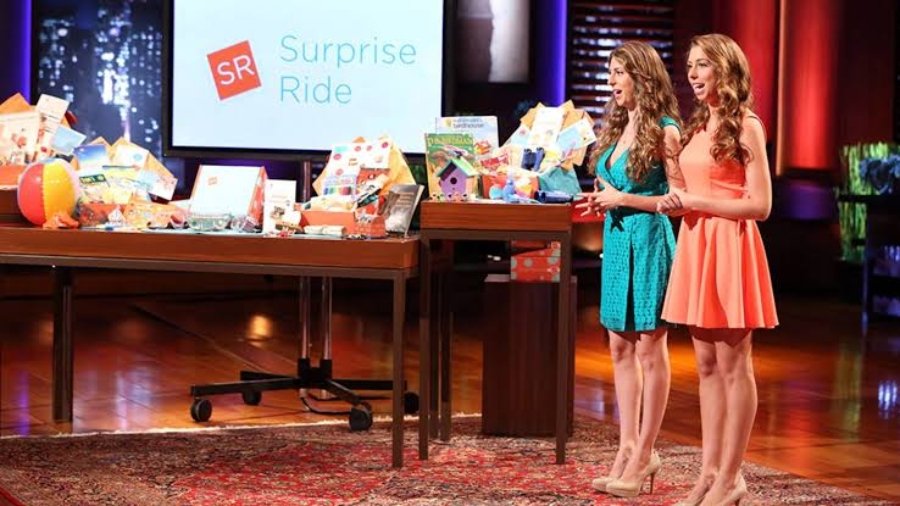
Surprise Ride was a children’s subscription box company founded by sisters Donna and Rosy Khalife. Each month, subscribers received a themed box filled with curated, hands-on educational activities for kids.

The key word here is “curated.” This wasn’t a box of random toys. Each box was built around a specific theme designed to encourage kids to actually engage with what they received — think activities that required doing something, not just playing with something pre-built.

That positioning mattered. The subscription box space was crowded, and Surprise Ride carved out space by leaning into educational value rather than novelty. It was a meaningful distinction in a market where most competitors were focused on volume and variety over depth.

The Original Shark Tank Pitch

Donna and Rosy appeared on Shark Tank during Season 5. They asked for $110,000 in exchange for 10% equity in the business. No deal was made during the episode.

That’s worth framing correctly. Not getting a deal on Shark Tank doesn’t automatically mean the pitch was a failure. The show has a specific format, specific Sharks with specific investment criteria, and a time constraint that doesn’t always favor every business. Some companies walk away without a deal simply because the fit wasn’t right in that moment.

For Surprise Ride, the appearance still did something real: it put the brand in front of a national audience. That kind of visibility has a measurable effect on traffic, subscriptions, and overall public awareness — even when no money changes hands on the show itself.

How Kevin O’Leary Invested After the Show

This is the part that often gets confused in coverage of Surprise Ride, so it’s worth being precise. Kevin O’Leary did not invest during the original Shark Tank episode. The investment came later, through Beyond the Tank, the follow-up series that revisited companies after their original appearances.

According to Business Insider, O’Leary invested in Surprise Ride outside the original pitch — making the company the first to land a Shark investment after missing out on the initial show. That’s an unusual outcome, and it says something about how the brand held up after its TV moment.

The practical lesson here is straightforward: the Shark Tank appearance opened a door. But the actual capital came through a separate follow-up relationship. The show was the starting point, not the finish line.

This distinction also matters for founders who think about Shark Tank purely as a funding vehicle. In Surprise Ride’s case, the more durable value of the appearance wasn’t the pitch itself — it was the continued visibility that kept the company on O’Leary’s radar.

Sales Growth After Shark Tank

The numbers tell a clear story about what TV exposure combined with real investment can do for a small startup.

According to reporting from Looper, Surprise Ride hit $500,000 in sales by the end of 2014 following the Shark Tank appearance. By the end of 2015, that figure had grown to $1 million. With Kevin O’Leary’s involvement, the company reportedly reached over $3 million in sales within roughly two years of the partnership.

These are reported figures, not guarantees, and growth trajectories vary widely depending on market conditions, execution, and a dozen other factors. But the direction is clear: the combination of public visibility and actual investment helped the company scale from a subscription startup into something that looked like a real acquisition target.

It’s also worth noting what drove that early growth. The Shark Tank bump gave Surprise Ride a traffic and awareness spike that a small company would normally spend years building. The challenge for any business after that kind of exposure is converting short-term attention into long-term subscribers — and by the numbers, Surprise Ride largely managed to do that.

The Fat Brain Toys Acquisition in 2018

In November 2018, Surprise Ride was acquired by Fat Brain Toys, an established toy and games company. The acquisition price was not disclosed, and there’s no reason to speculate on the number.

Fat Brain Toys is known for quality educational toys and games, which made Surprise Ride a logical fit for their portfolio. The brand’s emphasis on curated, learning-focused activities aligned well with what Fat Brain was already building. This wasn’t a random acquisition — it was a strategic one.

Surprise Ride announced the move through its own social media channels, describing the transition as joining the Fat Brain Toys family. PR Newswire covered the official announcement, which specifically identified Surprise Ride as a Shark Tank company — a detail that shows how much the show’s brand association still carried weight years after the original appearance.

The acquisition is the clearest signal that Surprise Ride became a genuine business, not just a TV moment. Getting acquired by an established company in your industry is a real exit. It means another business looked at your customer base, your brand, and your product and decided it was worth paying for.

For entrepreneurs tracking startup outcomes, that distinction matters. A lot of businesses get a PR boost from Shark Tank. Fewer build something durable enough to become an acquisition target. Surprise Ride did both.

Is Surprise Ride Still in Business?

After the acquisition, Surprise Ride continued operating under the Fat Brain Toys umbrella. Some later reporting describes the brand as still active, with product listings available and the subscription model continuing in some form.

The most concrete, well-supported milestone in the company’s timeline is the 2018 acquisition. What the brand looks like in operational terms today — subscription volume, product lineup, pricing — is harder to confirm with precision. If you’re a current or potential customer, checking directly with Fat Brain Toys or Surprise Ride’s official channels is the most reliable way to get up-to-date details.

For business purposes, what matters is that the brand survived well past its Shark Tank moment, scaled to a reported $3 million in sales, and was eventually absorbed by a company with the infrastructure to support it. That’s a solid arc for a small startup that didn’t even close a deal on the show itself.

What the Surprise Ride Story Actually Teaches

If you strip away the TV angle, the Surprise Ride story is about a few practical things that apply to any small business.

  • Visibility without capital is still useful. The Shark Tank appearance gave Surprise Ride something most startups never get: national exposure at scale. Even without a deal, that mattered.
  • The pitch isn’t always the deal. O’Leary invested later, not during the episode. Sometimes relationships develop after the formal process, not during it.
  • Subscription models need retention, not just acquisition. Hitting $1 million in sales means customers were sticking around, not just signing up after a TV appearance and canceling.
  • A good acquisition is a real outcome. Not every startup should aim to be a unicorn. Getting acquired by an established company in your category, at a reasonable multiple, is a legitimate exit strategy.

For more analysis on real business outcomes and startup stories, Daily Business Zone covers the kind of practical business updates that go beyond the headlines.

Final Thoughts

Surprise Ride’s Shark Tank story is a good example of how the show’s real value isn’t always the investment — it’s the platform. Donna and Rosy Khalife left Season 5 without a deal, but they used the exposure to grow their business, eventually attracted Kevin O’Leary through a follow-up series, scaled past $3 million in reported sales, and sold the company to an established toy brand in 2018.

That’s not a story about failing on Shark Tank. It’s a story about what happens when a team builds something real enough to keep moving forward — with or without the cameras on.

Read Also:

Trunkster Shark Tank Update

Trunkster Shark Tank Update: What Went Wrong

Trunkster raised over $2.7 million from backers, landed an on-air deal with two Sharks on national television, and still shut down — leaving thousands of customers without their luggage or their money. It’s one of the more striking examples of how early momentum and media attention can’t substitute for solid operations.

Here’s a factual breakdown of what Trunkster was, what happened on Shark Tank, why the business collapsed, where the founders are now, and what you can take away from this case.

What Trunkster Was and Why It Generated So Much Buzz

Trunkster was a zipperless suitcase with a sliding front panel that let you access your bag without unzipping the whole thing. It also had a built-in digital scale, a USB charging port, and GPS tracking built in. For 2015, that combination of features was genuinely interesting.

The company was founded by Jesse Potash and Gaston Blanchet. Before they ever appeared on Shark Tank, they had already raised serious money from the public. Their Kickstarter campaign brought in approximately $1.39 million from more than 3,500 backers. They followed that up with roughly $1.5 million on Indiegogo. Total crowdfunding raised: over $2.7 million.

That kind of pre-sale success made Trunkster look like a product with proven demand. Backers weren’t just interested — they were putting real money down. That context matters when you look at what happened next.

The Shark Tank Pitch and the On-Air Deal

Trunkster appeared on Season 7, Episode 10 in 2015. The founders walked in asking for $1.4 million in exchange for 5% equity. That implied a $28 million valuation — one of the larger asks in that season.

Mark Cuban and Lori Greiner partnered on an offer. The deal structure was unusual. Rather than a clean equity investment, it was structured more like a loan with repayment terms — reportedly getting their $1.4 million back over 24 months, plus equity and advisory shares. The exact terms vary slightly depending on which recap source you read, but the consistent point is that it was complex and non-standard.

The negotiation got heated. The founders pushed back hard on their valuation and defended their projections under pressure. That made the segment memorable and gave it a lot of replay value online. The episode ends with a handshake.

But a handshake on Shark Tank is not a signed contract.

The Deal Never Closed — and the Business Started to Crack

After filming, the deal with Mark Cuban and Lori Greiner did not close. Neither Shark made a public statement explaining why. Based on how these situations typically go, due diligence likely raised concerns about operations, fulfillment risk, or the valuation itself.

This is more common than most viewers realize. A lot of Shark Tank deals look done on screen and then fall apart quietly in the weeks after filming. Trunkster is one of the more prominent examples of that pattern.

Without the deal, and with manufacturing delays hitting in 2016, the company began to break down. Backers who had pledged money on Kickstarter and Indiegogo started waiting. Then kept waiting. Many never received their luggage at all. Those who did receive units reported quality that fell short of what the product videos had shown.

The comment sections on the original crowdfunding pages became a record of backer frustration — non-delivery complaints, requests for refunds that didn’t come, and a company that had gone quiet.

Why Trunkster Failed Despite Early Momentum

There wasn’t one single cause. It was a combination of problems that compounded each other.

The Smart Luggage Market Got Competitive Fast

By the time Trunkster was trying to fulfill orders, the smart luggage category had filled up. Other brands were offering comparable features — and in some cases better quality — at similar or lower price points. Trunkster was priced too high for travelers looking for value, but wasn’t differentiated enough to justify a premium price for buyers who could afford it.

That’s a difficult position to be in. You’re not winning on price, and you’re not winning on quality.

The Crowdfunding Model Left No Room for Error

Trunkster used pre-sale money to fund production. That’s a common hardware startup approach, but it’s fragile. If manufacturing hits a snag — a supplier issue, a design revision, a logistics problem — you’re already behind, and your “customers” are actually backers who took a risk on you. They’re not buying from a shelf. They’re funding the production of something that doesn’t exist yet.

When delays hit in 2016, Trunkster didn’t have the buffer to absorb them. The money was already spent or committed, and the units weren’t ready.

Communication Stopped

After February 2017, Trunkster essentially went silent. No meaningful updates to backers, no public acknowledgment of how bad the situation had become. For a company that had built its brand on public excitement and community support, going dark was a trust-destroying move.

By around 2018, the company appears to have ceased operations entirely. The website is no longer functional. The Facebook and X (formerly Twitter) accounts have been deleted. As of now, Trunkster is not in business and shows no signs of returning.

Backers — many of whom are still vocal online — report receiving no refunds. Thousands of people who put money into the Kickstarter and Indiegogo campaigns were left with nothing.

Was Trunkster a Scam?

Some backers and online communities have asked that question directly. The frustration is understandable. People paid real money, received nothing, and got no explanation.

That said, the available evidence points to a badly executed startup rather than a deliberate fraud. Some units were delivered, though quality was poor. The product was real, the crowdfunding campaigns were genuine, and the Shark Tank appearance was legitimate. The failure appears to have come from manufacturing problems, poor operational planning, and an inability to manage a complex supply chain — not from intent to deceive.

That distinction matters, but it doesn’t make the outcome better for backers who lost money.

Where the Founders Are Now

Both founders have moved on, though neither has spoken publicly about Trunkster in any significant way.

Gaston Blanchet went on to found Storypod, an audio-based learning tool for children. It’s a tangible product in a different space — edtech hardware — which suggests he stayed in the physical product world despite what happened with Trunkster.

Jesse Potash reportedly moved into operations at Bungalow, a co-living and housing company. He’s maintained a very low profile since Trunkster shut down.

Both have rebuilt careers in different industries. That’s a realistic picture of what life after a failed startup can look like — not dramatic, not fully resolved, just moving forward.

What Entrepreneurs and Backers Can Learn From This

Trunkster’s story is useful because it covers several failure points at once. Here’s what stands out:

  • An on-air Shark Tank deal means very little by itself. Due diligence happens after filming. Many deals never close. Don’t treat the handshake as the finish line.
  • Crowdfunding pre-sales don’t prove a business is ready to scale. They prove there’s interest. Manufacturing, logistics, and quality control are completely separate problems.
  • Hardware is hard. Physical products have supply chains, lead times, and quality control issues that software doesn’t. Underestimating that complexity is one of the most common reasons hardware startups fail.
  • Silence during a crisis makes everything worse. When things go wrong — and they often do — backers and customers want to know what’s happening. Going quiet doesn’t protect you. It just adds a trust problem on top of an operational one.
  • A high valuation creates pressure, not safety. A $28 million valuation based largely on pre-orders and unproven manufacturing is a liability if the business can’t back it up.

For anyone considering backing a hardware startup through crowdfunding: treat it as a speculative investment, not a purchase. You may get the product. You may not. Trunkster is a clear example of that risk playing out at scale.

If you’re building a product company, the Trunkster case is worth studying in detail. For more business case studies and practical analysis, visit Daily Business Zone.

Final Thoughts

Trunkster had real things going for it: a genuinely interesting product, millions in public backing, and national TV exposure. None of that was enough to overcome manufacturing failures, a pricing problem, and an operational structure that couldn’t handle setbacks.

The company is gone. The backers largely didn’t get their money back. The founders have moved on to other work. What’s left is a useful case study — one that shows how quickly early momentum can unravel when the execution doesn’t hold up.

The lesson isn’t that crowdfunding or Shark Tank appearances are worthless. It’s that neither one substitutes for being able to actually deliver what you promised.

Read Also:

images

Mush Shark Tank Update: Where the Brand Stands Today

MUSH started by selling overnight oats at farmers markets. In their first year, they brought in $72,000. Today, the brand sits in over 11,000 retail locations across the country. That’s a significant growth story — and it started with one Shark Tank pitch.

This article covers what happened at the original pitch, how the Mark Cuban deal played out, how the business scaled, what changed with the founders, and where MUSH stands right now.

The Original Shark Tank Pitch

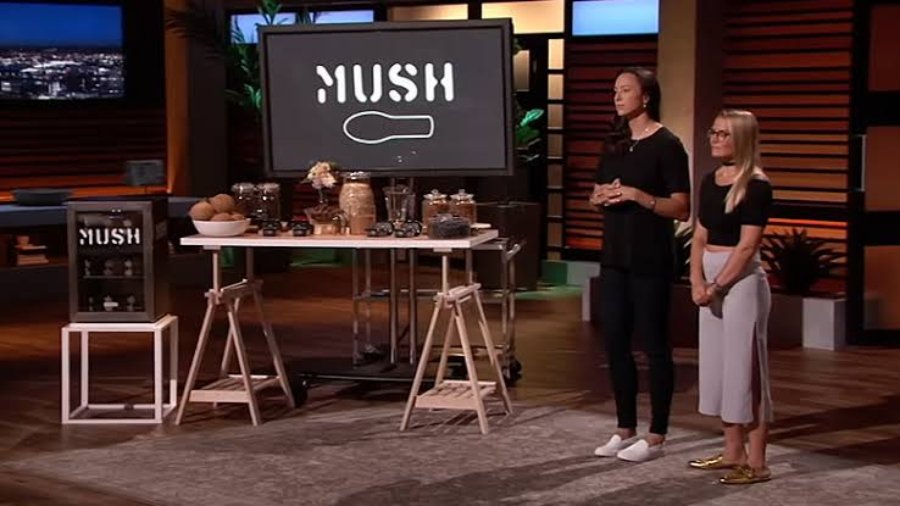
MUSH appeared on Season 9, Episode 12 of Shark Tank, which aired on November 26, 2017. Founders Ashley Thompson and Kat Thomas walked in asking for $300,000 in exchange for 10% equity — putting their implied valuation at $3 million.

The product was simple: ready-to-eat refrigerated overnight oats in single-serve containers. No cooking required, no added sugar, and a short ingredient list. The pitch was aimed at busy people who wanted a healthier breakfast without the prep time.

Before the episode aired, MUSH was already in roughly 100 retail stores. But the bulk of their early history was at farmers markets, where they had earned that first-year $72,000. They weren’t a complete unknown, but they were still a small operation with a big distribution goal.

What Mark Cuban Agreed To — and What Happened After

Mark Cuban made a deal during the episode, and it was finalized after the show. Cuban’s money went toward something practical: a used automated manufacturing line that let MUSH scale production without building from scratch.

His role was that of investor and advisor. He wasn’t running day-to-day operations — the founders were. But his capital and guidance helped the company move from a small-batch operation to one capable of handling real retail volume.

The growth came quickly. In a 2019 update segment, Ashley Thompson reported $5 million in sales — roughly 1.5 years after the original pitch. For context, the projected 2018 sales figure had been around $900,000. They beat expectations by a wide margin.

How MUSH Scaled Its Retail Presence

Right after Shark Tank, MUSH landed in some high-profile spots. Early placements included Whole Foods, select CVS stores, 7-Eleven, and Amazon. Those aren’t easy accounts to win for a small food brand, and they gave MUSH credibility with bigger retailers.

The expansion didn’t stop there. By September 2022, MUSH had grown to over 3,800 stores nationwide. That included Publix, Wegmans, ShopRite, Target, Costco, and Walmart — a mix of natural food retailers and mass-market chains.

As of May 2024, that number had climbed to over 11,000 retail locations. New additions included Bristol Farms, Erewhon, Kroger, and Sprouts. You can also buy MUSH online through Amazon, Misfits Market, Imperfect Foods, and the brand’s own website.

One distribution move worth noting: MUSH partnered with Dot Foods, a foodservice redistributor. That partnership opened up placements in gyms, coffee shops, and college campuses — channels that most grocery-focused CPG brands don’t tap into early on.

Funding, Revenue, and the VC Money That Followed

Mark Cuban’s investment was the starting point, but it wasn’t the end of outside capital. According to reporting from The Takeout, MUSH’s total funding grew to approximately $23 million after Shark Tank.

That includes a $5 million venture capital investment in June 2021, which came as the brand was pushing into more mainstream retail. VC firms don’t write $5 million checks to struggling brands — that investment signals that outside investors saw a real growth opportunity, not just a Shark Tank novelty.

Annual revenue exceeded $5 million by the time of early post-show updates, and multiple sources describe MUSH as a multi-million dollar company. Detailed current financials aren’t publicly available, so specific profit figures aren’t something anyone outside the company can confirm.

Product Line Changes Since the Pitch

When Thompson and Thomas pitched on Shark Tank, they had one core product: refrigerated overnight oats in multiple flavors, sold in rectangular tubs. That product still exists, but the line around it has grown considerably.

Packaging was updated from rectangular to cylindrical containers as part of a broader branding refinement. It’s a small change, but it matters on retail shelves where visibility and consistency affect buying decisions.

Beyond that, MUSH expanded into new product categories:

  • Oat-based protein bars — extending the brand into the snack aisle
  • Oat smoothies — a ready-to-drink style product built on the same oat base
  • MUSHkins — kid-friendly oat smoothies in pouches, aimed at parents looking for lower-sugar alternatives to squeeze yogurt or fruit snacks

The brand’s current positioning is straightforward: clean, ready-to-eat oats and protein snacks with no prep and no fillers. That message has stayed consistent even as the product range has widened.

What Changed With the Founders

Both Ashley Thompson and Kat Thomas co-founded MUSH and took it to Shark Tank together. But their roles changed as the company grew.

According to The Takeout, Kat Thomas stepped down as COO due to health reasons. The specifics of her situation were never publicly detailed, and it wouldn’t be fair to speculate beyond what’s been reported. What’s clear is that Thompson continued leading the company after Thomas stepped back.

This kind of founder transition is more common than most startup coverage acknowledges. It’s a real operational challenge — losing a co-founder mid-growth puts pressure on whoever stays. Thompson’s continued leadership, combined with Cuban’s support, kept the business moving forward through that change.

What Entrepreneurs Can Take From the MUSH Story

MUSH is a useful case study for anyone building a consumer food brand. A few things stand out:

Starting small doesn’t mean staying small. Farmers markets are a legitimate testing ground. MUSH used them to validate demand before going after retail. By the time they pitched on Shark Tank, they already had real sales data and 100+ store placements.

Capital allocation mattered. Cuban’s money didn’t go into marketing or a fancy office. It went into a used manufacturing line that solved a real production bottleneck. That’s a practical decision that directly enabled growth.

Retail diversity reduced risk. MUSH didn’t just land in one chain and stop. They built presence across natural grocers, mass-market retailers, convenience stores, and non-traditional channels through Dot Foods. That spread makes the business less dependent on any single buyer relationship.

Leadership changes happen. Kat Thomas stepping down could have slowed the company significantly. It didn’t — partly because Thompson kept executing, and partly because the business had outside capital and infrastructure to support continued growth.

For more coverage of business growth stories and practical startup strategy, check out Daily Business Zone.

Where MUSH Stands Today

As of 2024, MUSH is one of the cleaner Shark Tank success stories in the food category. The brand went from farmers market tables to 11,000+ retail locations in under seven years. It attracted $23 million in total funding, expanded its product line, and maintained national distribution across grocery, convenience, and specialty retail.

There are no reported signs of distress, acquisition talks, or major strategic pivots. MUSH appears to be in a steady growth phase — not a startup anymore, but still expanding.

For anyone wondering whether the Cuban deal was worth it: the numbers suggest it was. The capital got production moving, the retail relationships followed, and the VC money that came later confirmed outside confidence in the brand. Thompson and the team did the execution work — but having the right investor at the right time clearly helped.

Read Also:

Swipensnap Shark Tank Update

Swipensnap Shark Tank Update: Where the Brand Stands Now

A mom inventor walks into Shark Tank with a simple diaper cream applicator. She walks out with two Sharks, half her company gone, and a business model she didn’t come in with. That’s the short version of Alina Kravchenko’s story.

This article covers who she is, what SwipenSnap actually does, how the deal was structured, why the Sharks pushed her toward licensing, and where the business stands today.

What SwipenSnap Is and Why It Exists

SwipenSnap is a one-hand diaper cream applicator. It screws onto standard diaper cream tubes and dispenses cream through a soft, BPA-free tip in a single pressing motion. The idea is simple: one hand holds the baby, the other applies the cream — no finger contact, no mess, no fumbling with a cap at 3 a.m.

Think about what that actually looks like. You’re changing a diaper in the middle of the night. You need one hand to hold the baby’s legs up. Normally, you’d be trying to unscrew a tube, squeeze cream onto your fingers, and spread it — all while keeping the baby still. SwipenSnap removes most of that juggling.

The applicator isn’t a proprietary tube system. It screws onto many standard diaper cream tubes, which means parents don’t have to buy a special brand of cream to use it. That universal fit is part of what makes it practical, and it’s also central to the licensing angle the Sharks later pushed.

Kravchenko, a mom herself, invented it based on her own experience. She secured a US utility patent on the applicator and screw-top system before appearing on the show.

The Shark Tank Pitch — Season 12, Episode 11

Kravchenko appeared on Season 12, Episode 11 of Shark Tank (also listed as episode 1213). She came in looking for investment to grow sales and scale the product — a straightforward retail growth pitch for a consumer product with a patent behind it.

What shifted during the pitch was the framing. Kevin O’Leary, in particular, pushed back on thinking of SwipenSnap purely as a single product to sell. He redirected the conversation toward the patented screw-top technology itself as the core asset.

The logic: if a major baby-care or personal-care brand licenses that cap technology, SwipenSnap earns recurring revenue without having to own every part of the manufacturing and distribution chain. The product you sell to consumers becomes the proof of concept. The licensing deals become the real business.

This is a common pattern with investor-inventor relationships. Founders often see their product as the business. Experienced investors sometimes see a different asset — a patent, a format, a system — that could generate much more value if deployed differently. Whether that reframe is right depends on execution, but it’s worth understanding when it happens.

The Deal — $120,000 for 50% Equity

Kravchenko left with a deal: $120,000 split between Lori Greiner and Kevin O’Leary in exchange for 50% equity combined. That’s a significant give-up for a founder at an early stage.

The deal wasn’t primarily structured around maximizing direct-to-consumer product sales. The focus, as both SharkTankBlog and CNBC report, was on licensing the screw-top technology to larger brands in baby care and possibly broader personal care categories.

The analogy that makes this clearest: think about how Keurig’s K-cup format or Swiffer’s pad system works. The branded product proves the concept, but the real scale comes when the format itself gets adopted more widely. SwipenSnap’s patented cap could work the same way — if major brands agree to build their tubes around it, the revenue potential grows far beyond what a single-SKU consumer product can generate.

The trade-off is real, though. At 50% equity, Lori and Kevin together hold a controlling stake. As Reddit discussion from the episode thread noted, that gives the Sharks significant influence over the company’s strategic direction going forward. Kravchenko gained capital, two well-connected investors, and access to retail and licensing networks. What she gave up was majority ownership and a degree of control over her own company.

It’s worth noting that many Shark Tank deals are renegotiated or structured differently after the cameras stop. No publicly confirmed details show that the deal closed exactly as presented on TV or that specific licensing agreements with major brands have been signed. The available reporting confirms the on-air deal terms, not the post-close specifics.

How the Business Has Performed Since the Episode Aired

SwipenSnap is still in business. Multiple update sources confirm the brand is active in 2026, which is more than four years after the episode originally aired.

By July 2024, lifetime revenue reportedly exceeded $1 million. For a single-SKU consumer product built around one inventor’s idea, that’s a meaningful number. It suggests the business has maintained steady sales rather than experiencing only a short post-show spike.

The product is sold through the official SwipenSnap website and through Amazon, where the brand has a dedicated storefront listed under “As Seen On Shark Tank Season 12 Episode 11.” That Shark Tank branding has become a consistent marketing anchor — it appears on the website, social media, and product listings.

On Instagram, the account describes SwipenSnap as “As seen on ABC ‘Shark Tank'” and “mom invented by @alina_inventor,” with the US patent and BPA-free status featured prominently. The Facebook page runs product video content that leans on the same messaging. This is a straightforward playbook: use the Shark Tank appearance as ongoing social proof and keep reinforcing it across channels.

What Founders Can Take From This

SwipenSnap’s story isn’t just interesting as a product update — it’s a useful case study for anyone building a patented consumer product.

Patents create options, not guarantees

A US utility patent gave Kravchenko protection and credibility. It’s what made the licensing angle viable. But a patent doesn’t automatically translate into revenue. You still need to find the right partners, structure the right deals, and execute. The patent creates an asset; how you use that asset is a separate question.

Investors may see your business differently than you do

Kravchenko came in with a retail product pitch. Kevin O’Leary came in seeing a licensable technology. Neither view is automatically correct, but the shift is worth noting. If you’re bringing a patented product to investors, be prepared for them to reframe what your core asset actually is. That reframe might open better opportunities — or it might take you away from what you’re actually good at building.

50% equity is a big number

There’s no universal rule on how much equity to give up, but giving away half your company at an early stage means you’re no longer the majority owner. The right question isn’t just “how much money am I getting?” It’s “what does this partner bring beyond the check, and is it worth the control I’m giving up?” In Kravchenko’s case, she got two investors with strong retail and licensing networks. Whether that was worth 50% is something only she can fully evaluate.

Shark Tank branding has long-term marketing value

Four-plus years after airing, SwipenSnap is still leading with “As Seen On Shark Tank” across every channel. For small consumer brands, that credibility signal keeps working long after the episode airs. It converts browsers into buyers on Amazon because it’s a trust shortcut — someone vetted this, it was on national TV, it’s real. If you get on the show, that marketing asset lasts well beyond the initial exposure.

For more business updates and practical analysis on brands making moves in the market, visit Daily Business Zone.

Where Things Stand

SwipenSnap is a small business that did something smart: it turned a simple parenting pain point into a patented product, got national exposure, and has kept running for years after. Over $1 million in lifetime revenue and confirmed activity in 2026 suggests the brand found a sustainable position, even if it’s not a massive consumer goods company.

The bigger story here is the licensing angle. Whether SwipenSnap eventually lands major licensing deals with established baby-care brands remains to be seen — no confirmed agreements have been publicly reported. But the framework the Sharks pushed Kravchenko toward is a legitimate one. If the cap technology gets adopted at scale, the business looks very different from a one-product Amazon shop.

For now, SwipenSnap is a real, active business built by a founder who saw a problem, patented a solution, and found two investors willing to bet on where the technology could go. That’s a harder path than it looks from the outside.

Read Also:

drainwig shark tank

Drainwig Shark Tank Update: The O’Leary Deal Outcome

Drainwig walked into the Shark Tank having already done $14.2 million in retail sales. Yet the founders had taken home only a fraction of that. That gap between headline revenue and actual founder earnings is what makes this story worth paying attention to — not just as a product success, but as a business lesson.

This article covers the origin of the product, what happened on Shark Tank, how the Kevin O’Leary deal played out, where the company stands today, and what entrepreneurs can take from the Drainwig model.

How a Piece of Dental Floss Led to a Consumer Product

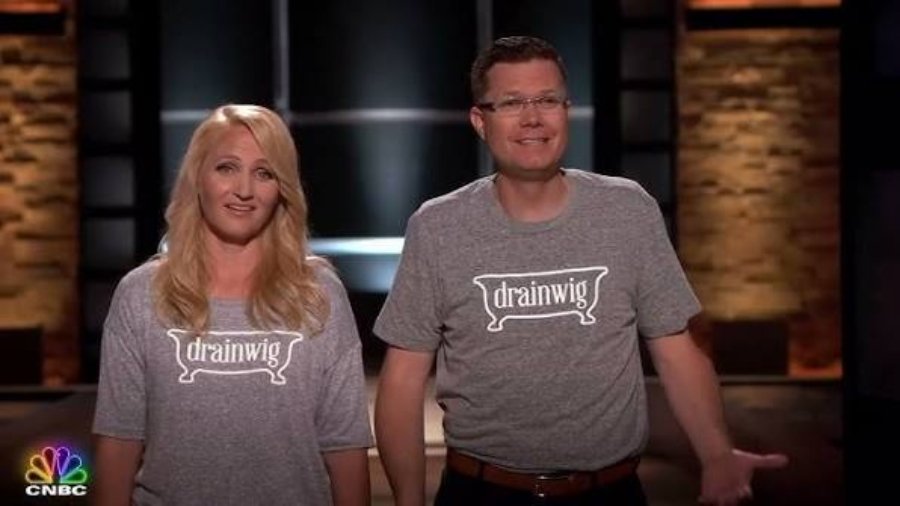
In 2013, Jennifer and Gifford Briggs were at home when dental floss accidentally fell into their shower drain. When Gifford opened the drain to retrieve it, he found the floss wrapped around a dense ball of tangled hair. That moment sparked the idea for Drainwig.

The product itself is straightforward. It’s a disposable chain with small rubber whiskers that sits inside a drain. As water flows past, the whiskers catch hair passively. After two to four months, you pull the chain out, throw it away, and replace it. No chemicals, no drain snake, no touching a wet clump of hair.

Drainwig was positioned as a cleaner, simpler alternative to liquid drain cleaners and manual snaking tools. From the beginning, the Briggs family ran it as a tight family operation — their five daughters helped assemble products and attended trade shows alongside their parents.

The Shark Tank Pitch — Season 9, Episode 6 (2017)

The Briggs family appeared on Season 9, Episode 6 of Shark Tank in 2017. They came in asking for $300,000 in exchange for 5% equity — putting their valuation at $6 million.

The number that caught everyone’s attention was $14.2 million in retail sales already on the books at the time of the pitch. That’s not a startup with a prototype. That’s an established product with real market traction.

The unit economics were solid too. Manufacturing cost ran approximately $1.20 per unit, while a double pack retailed at $9.99. That’s a strong gross margin for a consumer goods product. Drainwig had also already appeared in infomercials and had shelf space in big-box retail stores before the show aired.

Multiple sharks were interested. Lori Greiner and Daymond John both made offers. Kevin O’Leary closed the televised deal at $300,000 for 15% equity — a higher equity stake than the founders originally wanted, but it came with O’Leary’s network and credibility attached.

It’s worth noting that for Drainwig, Shark Tank wasn’t a launch pad. The business already existed and was selling at scale. The show functioned more as a credibility amplifier — and a path to a more structured partnership.

The Kevin O’Leary Deal and the Licensing Arrangement

The deal with Kevin O’Leary did close after the show, which isn’t always the case with televised Shark Tank agreements. According to Drainwig’s official “Our Story” page, the partnership led to a five-year licensing agreement.

Licensing arrangements like this have a real trade-off. The founders gained broader distribution reach without carrying the full operational burden of scaling the business themselves. But licensing also means giving up margin. The licensor or distributor takes a significant cut, and the inventor receives a royalty — usually a small percentage of sales.

A Reddit discussion in the r/sharktank community noted that after $14.2 million in retail sales through their infomercial partnership, the founders reportedly received around $800,000. That figure is anecdotal and not a verified financial fact, but it illustrates a pattern that shows up often in consumer product licensing: gross sales can look impressive while the inventor’s actual take-home is a much smaller slice.

Think of it like an author who licenses a book to a major publisher. The publisher handles printing, distribution, and marketing. The total sales might be substantial — but the author’s royalty might be 10 to 15 percent of net receipts, not gross sales. The Drainwig situation appears to follow similar logic.

This doesn’t mean licensing is a bad strategy. It often lets founders scale faster than they could on their own. But the economics need to be understood clearly before signing — especially when the distributor captures most of the margin.

Where Drainwig Stands Today

Drainwig is still in business. SharkTankBlog reported approximately $1 million in annual revenue as of April 2023, and SharkTankCompanies confirms the brand remains active as of 2026.

The product is currently available on Amazon, on Drainwig’s own website, and through at least some online retailers including The Container Store. Specific big-box retail presence is less clear at this point — some sources describe broad retail distribution while others are more cautious. It’s fair to say distribution has shifted somewhat toward online channels over time.

Social media activity has been limited since around 2019 to 2020, with Facebook largely inactive and minimal Instagram posting. But low social media activity doesn’t automatically signal a struggling business. The product targets a practical need — hair clogs — not a trend-driven market. Repeat buyers don’t need a social media nudge to reorder.

The product line has also evolved. The original flower-shaped holder has been joined by seashell and seahorse designs, along with a version built to sit hidden inside a bathtub drain. The core function hasn’t changed, but the aesthetic options and placement flexibility have expanded.

The Family Reclaiming the Business

One of the more interesting parts of the Drainwig story is what comes after the licensing period. According to their official “Our Story” page, with the five-year licensing agreement behind them, Jennifer and Gifford — along with their now-grown daughters — are positioned to reclaim and manage the business as a family again.

The daughters who once assembled products as kids are now adults focused on rebranding and bringing fresh ideas to the company. That’s a second chapter that doesn’t get talked about enough in entrepreneur circles: what happens when you take your business back after licensing, and how you rebuild momentum under family ownership again.

It also highlights a longer business arc than most Shark Tank stories. This isn’t a flash-in-the-pan product that rode TV exposure and then faded. It’s a family business that’s been through infomercials, licensing deals, a nationally televised pitch, and is now entering what looks like a third phase of operation.

What Entrepreneurs Can Take From the Drainwig Story

There are a few concrete lessons here that apply well beyond shower drains.

Gross sales don’t tell the whole story. $14.2 million in retail revenue sounds like a major success — and it is, in terms of market validation. But if the founders walked away with around $800K (per that Reddit discussion), that’s a very different picture. Always understand what the net looks like before signing a licensing or distribution deal.

Shark Tank works differently for established products. Drainwig didn’t need the show to launch. It needed legitimacy and a structured deal. That’s a different use of the platform than a startup with no sales and a rough prototype. If you already have traction, Shark Tank can help you level up — but your leverage at the table is different.

Licensing is a tool, not a shortcut. The Briggs family used licensing to grow faster than they could have managed independently. That worked. But it came with a cost in terms of margin and control. Know what you’re trading before you trade it.

Simple problems make durable products. Hair clogs aren’t going away. Drainwig doesn’t rely on a trend or a technology cycle. That kind of evergreen utility gives a product staying power that trend-based items rarely have.

For more practical breakdowns of real business stories, visit Daily Business Zone.

Final Thoughts

Drainwig is a good example of what a consumer product business actually looks like — not the cleaned-up pitch version, but the real thing. There are licensing trade-offs, margin gaps, distribution shifts, and family dynamics all mixed in together.

The founders built something real, took it to a national stage, navigated a licensing deal, and are now in the process of bringing it back under family control. That’s a full business story, not just a Shark Tank clip.

The product works, the company is still running, and the lessons it offers are practical ones. That’s more than most pitches can say a few years after the cameras stop rolling.

Read Also:

Plunge Shark Tank Update

Plunge Shark Tank Update: The Deal That Fell Apart

Plunge walked into Shark Tank asking for $1.2 million. They walked out with a verbal offer worth double that amount. Then the deal collapsed before anything was ever signed.

That story is more useful than a typical Shark Tank success narrative — because it shows exactly what can go right on camera and still go wrong after the episode ends. Here is the full picture: who built Plunge, what they pitched, what Robert Herjavec offered, why it fell apart, and how the business has held up through all of it.

What Plunge Sells and Who Built It

Plunge is a cold-water immersion tub company founded by Michael Garrett and Ryan Duey. The company is based in Lincoln, California, and has been operating in the home wellness space since 2020.

The product is straightforward: a high-end cold plunge tub designed for home use. It is built for recovery and daily wellness routines — not for recreational use. Think of it less like a hot tub and more like a piece of serious fitness equipment that happens to be filled with cold water.

A useful comparison is premium home fitness equipment. Like a high-end treadmill or a connected cycling bike, the Plunge tub is an expensive, branded product built around a daily habit. The base model is priced around $4,999, and the XL model runs around $6,990. These are not impulse purchases. The buyers are deliberately spending that kind of money to build a specific recovery routine.

The company has leaned into that positioning since day one. Plunge frames its product as a way to make cold immersion practical and consistent for serious users — not just athletes, but anyone who wants to build the habit at home.

The Shark Tank Pitch — What the Founders Asked For

When Garrett and Duey walked onto the Shark Tank set, they asked for $1.2 million in exchange for 5% equity. That implied a $24 million valuation — a significant number for a company in a category most mainstream consumers had never heard of.

What made the pitch stand out was not the ask. It was the revenue behind it.

The founders came in with real traction. According to figures shared during the pitch, the business generated $1.7 million in a single month — March 2020 — and was approaching $7 million in year-to-date revenue by the time they filmed the episode. That kind of growth is not a concept pitch. That is a company already moving fast and looking for fuel.

This context matters. Shark Tank did not create Plunge. The show amplified a business that was already working. The founders were not hoping an investor would validate their idea — they were showing up with real numbers and asking for a partner to scale further.

The pitch also framed cold plunging as a category trend, not just a single product. Wellness recovery as a daily habit. A market with serious buyers who were willing to pay premium prices for a premium experience at home.

Robert Herjavec’s Offer and Why It Got Attention

The Sharks listened, and Robert Herjavec responded with a counteroffer of $2.4 million — double what the founders asked for.

CNBC reported this as one of the biggest Shark Tank investments of 2022. The size of the offer reflected two things: the strength of the market opportunity and the fact that the founders had real revenue to back up their valuation.

On camera, it looked like a clean win. A growing company in a trending wellness category, getting a major check from a well-known investor. The kind of deal that makes for a memorable episode ending.

But the cameras stop. And that is where the story gets more complicated.

Why the Deal Never Actually Closed

Despite the on-air agreement, the deal between Plunge and Robert Herjavec never closed. It fizzled during the post-show due diligence and negotiation process.

Inc. covered this outcome directly, framing it as one of the best Shark Tank deals that never actually happened. The specific reasons were not fully disclosed publicly, but the pattern is common enough that it is worth understanding.

Here is how it typically works: a deal agreed to on camera is not a signed investment. After the episode films, both sides go through a due diligence process. Valuations get scrutinized. Legal terms get negotiated. Business details that were glossed over during a 10-minute pitch get examined closely. Sometimes the numbers hold up. Sometimes they do not. Sometimes the terms that seemed fine on a TV set look very different in a formal term sheet.

In Plunge’s case, the deal did not survive that process. Neither side has gone into full detail about why.

The practical lesson here is one that every entrepreneur who watches Shark Tank should understand: a handshake on television is not the same as money in the bank. Investor enthusiasm during a pitch — even a very public one — is not a commitment. The real work happens after the cameras go off, and that is where many deals quietly die.

This is not a criticism of Plunge or of Herjavec specifically. It happens regularly across Shark Tank deals. The on-air moment is a starting point, not a finish line.

How Plunge Has Positioned Itself Since the Episode

What is notable is that Plunge did not let the collapsed deal define the story. The company has continued to operate and has actively made its Shark Tank appearance part of its brand identity.

Plunge’s official website includes a dedicated Shark Tank page, which shows that the founders saw value in the exposure itself — separate from whether the investment closed. The appearance gave them visibility with a large audience of consumers who had never heard of cold plunge therapy, let alone a $5,000 home tub built around it.

That kind of exposure is valuable in ways that do not show up on a term sheet. Brand awareness, website traffic, new customer interest — these are real business outcomes from a Shark Tank appearance even when the deal falls apart in post-production.

For entrepreneurs considering whether to pursue a show like Shark Tank, Plunge is a useful case study. The investment did not close. The business continued anyway. The exposure contributed to the company’s growth story regardless of the deal outcome.

If you want more analysis on how real companies navigate investor relationships and brand growth, Daily Business Zone covers those topics regularly with straightforward business reporting.

What This Story Actually Tells You

The Plunge Shark Tank story is worth understanding on a few levels.

First, it is a reminder that strong fundamentals matter more than a good pitch. Garrett and Duey did not walk in with a prototype and a dream. They walked in with $7 million in year-to-date revenue and a clear category narrative. That is why they drew a $2.4 million offer. The pitch worked because the business was already working.

Second, it is a clear example of how Shark Tank deals actually function. The show creates a compelling moment. It does not guarantee an investment. Due diligence, valuation disputes, and post-show negotiations end many deals that looked finished on screen. Entrepreneurs who treat a handshake on the show as a done deal are setting themselves up for disappointment.

Third, it shows that a TV appearance can deliver real business value independent of the investment outcome. Plunge came out of the episode with more brand recognition, more customer awareness, and a story it still uses as part of its public identity today — none of which required the deal to close.

The company is still operating. Its products are still on the market. And its Shark Tank moment — deal collapse included — is still part of how it introduces itself to new customers.

That is not a failure. That is a company that understood what it actually got from the experience, and used it accordingly.

Read Also:

Billy Blanks Jr Shark Tank Update

Billy Blanks Jr Shark Tank Update: Where He Is Now

Billy Blanks Jr. turned down a Shark Tank deal on camera — and still managed to close it. That unusual sequence alone makes his episode one of the most talked-about in the show’s history. But the more interesting story is what happened after the cameras stopped rolling.

This article covers who Billy Blanks Jr. is, what he pitched, how the negotiation played out, and what the business looks like today. There are also a few practical takeaways for any entrepreneur thinking about outside investment.

Who Billy Blanks Jr. Is and What He Brought to the Tank

Billy Blanks Jr. is the son of Billy Blanks, the man who created Tae Bo in the 1990s. Tae Bo became one of the most recognized fitness brands of that era — a high-energy combination of martial arts and cardio that sold millions of DVDs and packed fitness studios.

Growing up in that environment gave Billy Jr. a strong fitness foundation. But he chose a different direction. Instead of martial arts cardio, he built a career around dance-based fitness — something more accessible, more social, and aimed at people who don’t think of themselves as athletes.

His pitch was built on a clear idea: fitness should be fun and available to everyone, regardless of age or skill level. That mission was his own. He wasn’t trying to extend his father’s brand — he was building something separate. Making that distinction clearly in front of the Sharks mattered more than most people realize.

The Original Shark Tank Pitch — Season 3, Episode 14

Billy appeared on Season 3, Episode 14, pitching a dance fitness program called Dance With Me. The concept was simple — structured dance classes for everyday people, not trained performers.

His ask was $100,000 for 20% equity. He came in with energy, brought live dancers, and essentially let the product demonstrate itself. That approach was smart. Instead of just explaining a fitness class, he showed the Sharks what it felt like to be in one.

The pitch went well enough in terms of concept, but the Sharks raised two serious concerns. First, they questioned the business model. Second — and more critically — they questioned whether Billy actually owned the brand and the program rights. That second issue nearly killed the deal before it started.

When a Shark asks who owns the IP, it’s not a formality. It’s a warning sign. If a founder doesn’t fully control the core asset, an investor has no clean path to protect their money. This point became the central tension in the negotiation.

Why He Turned Down the Deal — and Why Daymond Followed Him Out

Mark Cuban and Daymond John eventually made an offer: $100,000 for 50% equity. That’s more than double what Billy had offered. He said no.

His concern was straightforward — giving up half the company felt like too much. For a founder who had built something personal and was still developing the brand, that reaction makes sense. Equity isn’t just a percentage. It’s a stake in every future decision the company makes.

What happened next is the part that Shark Tank fans still talk about. Daymond John left the set and followed Billy off-camera to keep the conversation going. According to Daymond’s own account on his Facebook page, this was the only time he ever did that in Shark Tank history. He’s been direct about why: he saw genuine value in Billy and his vision, and he didn’t want to let the deal die over a moment of hesitation.

That kind of follow-through from an investor is rare. It also tells you something about what Daymond saw — not just a fitness class, but a scalable concept with real market potential.

Billy ultimately agreed to a revised deal with both Cuban and John: $100,000 for 50%, with additional support around rights, brand structure, and distribution. The equity terms didn’t change much, but the conversation had shifted. Billy had a clearer picture of what he was getting in return.

How the Business Changed After the Deal Closed

After the show, the brand went through a meaningful transition. Dance With Me became Dance It Out (DIO) as the primary program name. The rebrand wasn’t cosmetic — it reflected a more resolved version of the business, including cleaner ownership of the IP that the Sharks had flagged as a problem.

The investment helped Billy secure full rights to the program. That was the foundation everything else needed. Without it, scaling the business would have been legally complicated and practically difficult to franchise.

With the rights secured and the Cuban-John backing in place, Dance It Out expanded into a franchise system. Classes started appearing in gyms, community centers, and other public venues. The company also developed instructor training programs, which is how most fitness franchises actually grow — by certifying more teachers rather than relying on the founder to be everywhere at once.

The network connections Cuban and John brought helped with distribution and licensing too. DVDs, digital content, and structured class formats all became part of the product line. For a solo founder, building that infrastructure alone would have taken years and significant capital.

Where Dance It Out Stands Today

Dance It Out is still operating. The brand has moved further into digital content and social media, which is consistent with where the broader fitness industry has gone since the show aired.

Billy continues to produce new workout content and runs the Dance It Out platform. One recent example is a collaboration with his father called “Battle of The Billy’s Digital Workout” — a project that bridges the two generations of fitness brand-building. It’s a smart move. It generates content, connects two audiences, and keeps both brands relevant without one absorbing the other.

Active social media presence, new digital programs, and ongoing franchise activity suggest the business is in a stable place. There are no publicly reported figures on revenue or exact franchise count, so it’s not worth speculating on scale. What is clear is that the brand did not fade after the initial TV exposure — it built on it.

Business Lessons Worth Taking From This Story

If you’re an entrepreneur, Billy’s Shark Tank journey offers a few things worth paying attention to.

Secure your IP before you seek investment

The biggest red flag in Billy’s pitch had nothing to do with his product or presentation. It was the question of who owned the brand. Investors will not put money into a business where the core asset — the brand, the program, the process — isn’t clearly controlled by the founder. Sort out your intellectual property before you walk into any investor meeting.

Equity decisions should be made on value, not just percentages

Billy went in asking for 20% and ended up giving away 50%. On paper, that sounds like a loss. In practice, he got two experienced investors, access to their networks, help resolving a legal problem that could have blocked his growth, and the platform to build a national franchise. The percentage matters less than what you’re actually getting in return for it.

Turning down a deal isn’t always the end

Billy walked away on camera. Most people would have considered that the end. Instead, it opened a second conversation — one where both sides had a clearer understanding of the stakes. Investors who genuinely believe in a business will sometimes push past an initial refusal. That doesn’t mean founders should manufacture hesitation as a tactic. But it does mean that a rejected offer isn’t always the final word.

TV exposure is a starting point, not a business model

A lot of founders who appear on Shark Tank get a sales spike and then watch it fade. Billy used the moment differently — he used it to resolve structural problems in the business, build a franchise system, and create repeatable revenue through classes and licensing. Exposure gets attention. What you do with that attention determines whether it turns into something lasting.

For more practical business coverage, including founder stories and investment insights, visit Daily Business Zone.

Final Thoughts

Billy Blanks Jr.‘s Shark Tank episode stands out for one specific reason: it shows what happens when both sides of a deal are willing to keep talking after the cameras stop. Daymond John left the set. Billy reconsidered his position. And what looked like a breakdown turned into a deal that reshaped the business.

Dance It Out is still running. The brand has expanded, gone digital, and stayed active years after the original air date. That’s not guaranteed for any small business that gets a moment of TV exposure. It’s the result of resolving real problems — IP ownership, brand structure, distribution — with the right support in place.

If there’s one takeaway from this story, it’s that the pitch is only part of the deal. What you do with the structure behind it is what actually builds the company.

Read Also:

Sweet Ballz

Sweet Ballz Shark Tank Update: Where Are They Now?

Sweet Ballz landed a deal with two Sharks on national television — then sued their own co-founder within a week of the episode airing. The investment never closed, the company split into two competing brands, and the website crashed under the weight of post-show orders. And yet, over a decade later, Sweet Ballz is still operating.

Here’s a clear breakdown of what happened during the pitch, why the deal collapsed, how the founders’ legal battle nearly destroyed everything, and where the business stands today in 2025.

What Sweet Ballz Pitched on Shark Tank

James McDonald and Cole Egger founded Sweet Ballz in Dallas, Texas. Their product was simple: chocolate-covered cake balls sold in multi-packs, targeted primarily at convenience stores like 7-Eleven.

The two appeared on the Season 5 premiere of Shark Tank in 2013. They were looking for capital to scale production and push their retail distribution further. The pitch worked on television — Mark Cuban and Barbara Corcoran offered $250,000 for 25% equity, and McDonald and Egger accepted the deal on air.

That’s where the straightforward part of the story ends.

The Founder Lawsuit That Derailed Everything

Within a week of the episode airing, McDonald filed a lawsuit against Egger and others. The allegations were serious: Egger reportedly made unilateral business decisions without McDonald’s consent and redirected Sweet Ballz website traffic to a competing site.

The legal dispute involved ownership of the Sweet Ballz website, the product itself, and the parent company, City View Food Group. A restraining order was sought as part of the litigation. SharkTankBlog covered the conflict in a post they aptly titled “Sour Ballz.”

As a direct result of the legal conflict, Cuban and Corcoran did not proceed with their investment. The deal that had been struck on national television never actually closed. McDonald eventually became the sole owner of Sweet Ballz after the dispute resolved — but the damage was already done.

It’s worth being clear: these were allegations made in litigation. The details here are reported neutrally, not as legal conclusions about who was at fault.

Two Brands, One Fight — How Sweet Ballz Split in Two

The founder dispute didn’t just kill the Shark deal. It produced two separate, competing businesses: Sweet Ballz and The Cake Ball Company, also known as Cake Ballz. For a period after the legal fallout, both entities were operating simultaneously.

Meanwhile, something else was happening. The moment the Shark Tank episode aired, the Sweet Ballz website was overwhelmed by order volume and crashed. The company had to pause orders and publicly apologized on Facebook to customers who couldn’t complete purchases. It’s a textbook example of the “Shark Tank effect” — massive sudden demand hitting a business that wasn’t built to handle it yet.

So Sweet Ballz was managing a website crash, a public relations mess, and a lawsuit at the same time. The combination nearly ended the brand. Eventually, the dust settled: Sweet Ballz survived, and Cake Ballz is now defunct.

How the Business Model Changed After Losing the Sharks

The original plan for Sweet Ballz was built around convenience store distribution, with 7-Eleven as a major target. That plan didn’t survive. Sweet Ballz has since confirmed that its products are no longer sold at 7-Eleven.

Losing that retail anchor forced a rethink. The business shifted toward two main channels: food-service distribution and co-packing, and direct-to-consumer online sales.

Food-Service and Co-Packing

Rather than pushing only its own branded product into retail stores, Sweet Ballz began supplying cake balls in bulk to other brands and institutional buyers. This is essentially a B2B model — acting as a manufacturer for other companies rather than competing for shelf space as a consumer brand. It’s a quieter business, but it’s more stable than depending on a single retail chain.

Seasonal Online Sales

Sweet Ballz also sells directly to consumers through its website, but not year-round. Online orders run from late fall through spring and pause during summer. The reason is practical: chocolate-covered cake balls don’t ship well in heat. Closing online sales during summer reduces product damage, customer complaints, and costly returns. It’s a straightforward quality-control decision.

The website at sweetballz.com sometimes shows a password-protected storefront or a “Sweet Ballz is taking a summer break” message, which has confused some customers — but it’s an intentional operational choice, not a sign the company has shut down.

Grocery Bakery Expansion

According to reporting from The Daily Meal, Sweet Ballz has plans to expand into grocery store in-store bakeries, with 2025 targeted as the window for that push. This is still a planned move, not a confirmed wide rollout, so it’s worth watching rather than assuming it has already happened.

Where Sweet Ballz Stands Today

The current product line includes birthday cake, chocolate, cookies and cream, lemon, and red velvet — with occasional limited flavors like salted caramel and spicy chocolate. Packages are sold in 15-count trays priced at around $30, with discounts available when ordering two or more trays.

Revenue estimates vary slightly by source. SharkTankBlog estimated annual revenue around $5 million as of late 2022. The Daily Meal puts the figure closer to $4 million per year in more recent reporting. These are estimates, not audited figures, but they consistently suggest the business is generating real revenue.

Social media activity went quiet after December 2020, which led some observers to assume the company had folded. But new posts appeared in November 2024, indicating the brand is still active. For a small food business focused heavily on B2B sales, social media silence doesn’t always mean the lights are off.

What Entrepreneurs Can Take Away From This

Sweet Ballz is often cited as a Shark Tank failure because the deal collapsed. That framing is incomplete. The company lost its investors, fought a public legal battle, lost its biggest retail partner, and still rebuilt to multi-million-dollar annual revenue. That’s not a failure story — it’s a messy survival story.

But there are real lessons here that are worth paying attention to:

  • Founder agreements matter before you go public. McDonald and Egger pitched on national television without having solid alignment on decision-making authority, IP control, and website ownership. When things went wrong, there was no clear structure to contain the damage.
  • Operational readiness has to match your marketing ambitions. Going on Shark Tank — or any high-visibility platform — without the infrastructure to handle a traffic and order spike is a preventable mistake. The website crash compounded an already bad situation.
  • Single-channel distribution is a concentration risk. Sweet Ballz built its original model around 7-Eleven. When that relationship ended, there was no backup. The pivot to B2B food service and seasonal DTC took time that might not have been needed with a more diversified approach from the start.
  • A failed investment deal isn’t the end of the business. Cuban and Corcoran walked away. Sweet Ballz found other ways to operate. Losing a high-profile investor is painful, but it doesn’t automatically mean the company is over.

For anyone tracking food startup case studies or following Shark Tank outcomes, Sweet Ballz is genuinely useful to study — not because it’s a perfect success, but because it shows what survival looks like when almost everything goes wrong at once.

If you’re researching other business turnarounds and startup lessons, Daily Business Zone covers practical business topics with the same no-fluff approach.

The Bottom Line

Sweet Ballz landed a Shark Tank deal, lost it to a founder lawsuit, split into two competing brands, lost its main retail partner, and still managed to build a business generating an estimated $4–5 million a year. The road was chaotic, but the company is still standing.

With grocery bakery expansion reportedly on the agenda for 2025 and online sales resuming each fall, Sweet Ballz is a small brand with a surprisingly durable track record — despite one of the messier post-Shark Tank histories on record.

Read Also: