
Most household products never make it onto Shark Tank. Fewer still walk away with a deal from Kevin O’Leary and go on to report $10 million in lifetime sales. VaBroom did both.
This article covers the full picture: what VaBroom is, how the pitch went down, what the O’Leary deal actually means, and where the business stands today. If you’re an entrepreneur trying to draw real lessons from a consumer hardware Shark Tank story, this one is worth studying.
What VaBroom Is and the Problem It Was Built to Solve
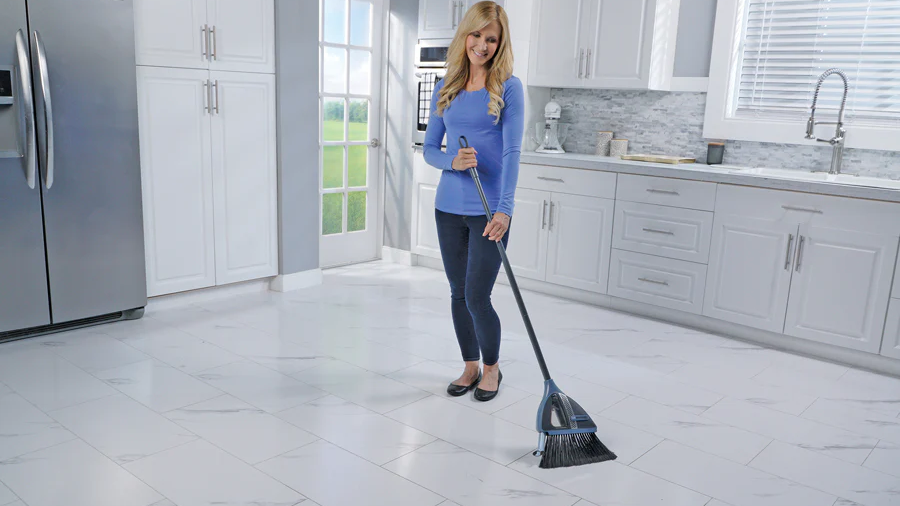
VaBroom is a cordless broom with a vacuum built into the base. You sweep a mess into a pile, tilt the broom head toward the debris, and the suction pulls it into a small onboard canister. No dustpan needed.
The product targets quick cleanups on hard floors — crumbs after breakfast, pet hair near a food bowl, cat litter scattered around a tray. It’s not designed to replace your vacuum. The founders were clear about that positioning: VaBroom is a better broom, not a cleaning appliance.
That distinction matters. It defines the market and sets realistic expectations for buyers. The product is built for people who hate bending down to use a dustpan — especially older adults, people with back issues, and parents dealing with small messes several times a day.
The Shark Tank Pitch — Numbers, Valuation, and What the Sharks Heard
VaBroom appeared on Season 13, Episode 9 of ABC’s Shark Tank. The founders, Trevor Lambert and John Vadnais, walked in asking for $350,000 in exchange for 2.5% equity.
That ask implied a pre-money valuation of $14 million. At the time of filming, the company had done $3.1 million in sales over the prior 12 months. Distribution included Bed Bath & Beyond and direct-to-consumer online sales.
Run the math: $3.1 million in trailing revenue against a $14 million valuation puts the revenue multiple at roughly 4.5x. That’s a bold ask for a hardware product, where margins are typically tighter than software and competition from established brands is real.
The pitch worked because it was grounded in a frustration nearly everyone has felt. There was no complex technology to explain, no jargon, no abstract market sizing slide. The problem — chasing debris with a dustpan, bending down repeatedly — was immediately relatable.
Trevor Lambert is the CEO of Enhance Innovations, a product design and licensing firm. VaBroom came out of that firm. John Vadnais leads sales operations. Together, they framed VaBroom not just as a product, but as a scalable consumer brand with retail traction already in place.
Kevin O’Leary’s Deal — What Was Agreed and What Is Confirmed
On air, Kevin O’Leary agreed to invest $350,000 in VaBroom. Multiple sources, including a social media recap and clips from the show, confirm that VaBroom “secured a $350,000 investment from Kevin O’Leary on Shark Tank in 2022.”
Here’s something worth understanding if you follow Shark Tank closely: deals made on television are not always finalized. After filming, both sides go through due diligence. Terms can change. Some deals fall apart entirely. At least one recap site noted that it was initially “unclear whether the deal closed” — which is a common situation with on-air agreements.
However, more recent coverage uses definitive language confirming a deal was secured. VaBroom actively markets its Shark Tank appearance and its association with O’Leary on both its official website and its Amazon listing. That kind of public branding would be unusual if no deal had materialized.
The equity percentage agreed on air was 2.5%. No credible source documents any post-show restructuring of those terms, so it’s best to take the on-air deal at face value without speculating further.
VaBroom’s Sales and Business Status After the Show
This is what most people want to know: did Shark Tank actually move the needle?
According to a late 2023 update from SharkTankBlog, VaBroom is still in business and described as “doing well.” The company’s annual revenue is reported at under $5 million, with $10 million in lifetime sales as of that update. A separate recap source estimates annual revenue at approximately $5 million.
A YouTube short titled “From Shark Tank to $10 Million” summarizes the post-show growth, which aligns with the lifetime sales figure cited by blog sources.
To be clear about what these numbers mean: this is steady, mid-seven-figure performance. It’s not a unicorn outcome. VaBroom didn’t become a household name overnight or disrupt the cleaning industry. But it built a real business with consistent revenue — which is a realistic and honest outcome for most consumer hardware brands that get Shark Tank exposure.
Where the Product Is Sold Today
VaBroom’s official website remains active, marketing the product as “The Original 2-In-1 Sweeper with Built-In Vacuum.” The site references its Shark Tank Season 13 appearance and sells direct to consumers.
The product is also available on Amazon, where the listing leans into the Shark Tank branding — calling it the “VaBroom Shark Tank 2-in-1 Cordless Electric Broom with Built-In Vacuum.” The Amazon description highlights its high-RPM motor and positions it for crumbs, pet hair, cat litter, and fine dust on hard floors.
The original retail partnership with Bed Bath & Beyond is worth noting in context: Bed Bath & Beyond filed for bankruptcy in 2023 and closed its stores. That was a retail channel that no longer exists, which underscores why DTC and Amazon presence matters for consumer product brands.
What Customers Actually Say
VaBroom’s own website features curated testimonials with positive language — claims of “exceptional suction” and solid battery life. That’s standard product marketing.
The more balanced picture comes from informal online discussions. Reddit threads in the Shark Tank community include complaints about weak suction and the product being awkward to maneuver when trying to engage the vacuum function. Some users felt the product didn’t deliver on the marketing promise.
This is a common gap in consumer hardware: the concept is easy to demonstrate in a pitch or a short video, but real-world performance across different floor types, mess sizes, and user habits is harder to control. VaBroom’s mixed reviews suggest it works well enough for the right use case but falls short for buyers who expect more power.
If you’re evaluating this as a business case, it’s a good reminder that strong marketing and Shark Tank exposure can drive initial sales, but long-term retention depends on whether the product consistently does what customers expect.
What Entrepreneurs Can Take From This
VaBroom’s story has a few practical takeaways that go beyond “get on Shark Tank.”
Valuation has to be defensible
Asking for a 4.5x revenue multiple on a hardware product is aggressive. It worked here partly because the founders had retail distribution in place and a clear product story. Without those, the Sharks would have pushed back harder.
Positioning matters as much as the product
Calling VaBroom “a better broom” instead of “a portable vacuum” was a deliberate choice. It set the right expectations and made the product easier to compare favorably against a simple, low-tech alternative — a regular broom and dustpan.
Post-show results are rarely explosive
The “Shark Tank bump” is real, but it doesn’t last forever. VaBroom reached $10 million in lifetime sales, which is a solid outcome. But it took years, not months. Businesses that plan for sustained effort after the episode airs tend to do better than those banking on one spike in traffic.
Mixed reviews are a product problem, not just a PR problem
If your product gets consistent criticism for a core function — in this case, suction strength — that’s a signal worth acting on. Marketing can get customers in the door. It can’t keep them coming back if the product disappoints.
For anyone tracking consumer hardware startups or studying how design firms bring products to market, VaBroom is a useful case. Trevor Lambert used Enhance Innovations as the vehicle to develop the concept, then used Shark Tank to add credibility, capital, and visibility. That’s a repeatable model — but it requires the product to hold up.
For more business breakdowns like this one, visit Daily Business Zone.
The Bottom Line
VaBroom is still in business. The Kevin O’Leary deal appears to have gone through. The company has reported around $10 million in lifetime sales and annual revenue estimated near $5 million as of late 2023.
It’s not a blockbuster outcome, but it’s a real one. A product that solved a specific, relatable problem, pitched clearly, got a credible investor, and built a sustainable mid-scale business. For most consumer hardware founders, that’s a better result than most ever see.
Read Also: