
MUSH started by selling overnight oats at farmers markets. In their first year, they brought in $72,000. Today, the brand sits in over 11,000 retail locations across the country. That’s a significant growth story — and it started with one Shark Tank pitch.
This article covers what happened at the original pitch, how the Mark Cuban deal played out, how the business scaled, what changed with the founders, and where MUSH stands right now.
The Original Shark Tank Pitch
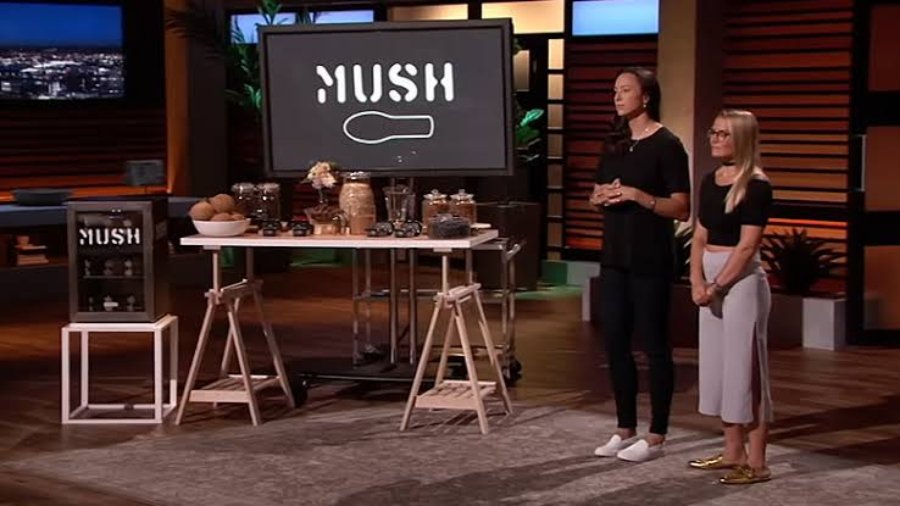
MUSH appeared on Season 9, Episode 12 of Shark Tank, which aired on November 26, 2017. Founders Ashley Thompson and Kat Thomas walked in asking for $300,000 in exchange for 10% equity — putting their implied valuation at $3 million.
The product was simple: ready-to-eat refrigerated overnight oats in single-serve containers. No cooking required, no added sugar, and a short ingredient list. The pitch was aimed at busy people who wanted a healthier breakfast without the prep time.
Before the episode aired, MUSH was already in roughly 100 retail stores. But the bulk of their early history was at farmers markets, where they had earned that first-year $72,000. They weren’t a complete unknown, but they were still a small operation with a big distribution goal.
What Mark Cuban Agreed To — and What Happened After
Mark Cuban made a deal during the episode, and it was finalized after the show. Cuban’s money went toward something practical: a used automated manufacturing line that let MUSH scale production without building from scratch.
His role was that of investor and advisor. He wasn’t running day-to-day operations — the founders were. But his capital and guidance helped the company move from a small-batch operation to one capable of handling real retail volume.
The growth came quickly. In a 2019 update segment, Ashley Thompson reported $5 million in sales — roughly 1.5 years after the original pitch. For context, the projected 2018 sales figure had been around $900,000. They beat expectations by a wide margin.
How MUSH Scaled Its Retail Presence
Right after Shark Tank, MUSH landed in some high-profile spots. Early placements included Whole Foods, select CVS stores, 7-Eleven, and Amazon. Those aren’t easy accounts to win for a small food brand, and they gave MUSH credibility with bigger retailers.
The expansion didn’t stop there. By September 2022, MUSH had grown to over 3,800 stores nationwide. That included Publix, Wegmans, ShopRite, Target, Costco, and Walmart — a mix of natural food retailers and mass-market chains.
As of May 2024, that number had climbed to over 11,000 retail locations. New additions included Bristol Farms, Erewhon, Kroger, and Sprouts. You can also buy MUSH online through Amazon, Misfits Market, Imperfect Foods, and the brand’s own website.
One distribution move worth noting: MUSH partnered with Dot Foods, a foodservice redistributor. That partnership opened up placements in gyms, coffee shops, and college campuses — channels that most grocery-focused CPG brands don’t tap into early on.
Funding, Revenue, and the VC Money That Followed
Mark Cuban’s investment was the starting point, but it wasn’t the end of outside capital. According to reporting from The Takeout, MUSH’s total funding grew to approximately $23 million after Shark Tank.
That includes a $5 million venture capital investment in June 2021, which came as the brand was pushing into more mainstream retail. VC firms don’t write $5 million checks to struggling brands — that investment signals that outside investors saw a real growth opportunity, not just a Shark Tank novelty.
Annual revenue exceeded $5 million by the time of early post-show updates, and multiple sources describe MUSH as a multi-million dollar company. Detailed current financials aren’t publicly available, so specific profit figures aren’t something anyone outside the company can confirm.
Product Line Changes Since the Pitch
When Thompson and Thomas pitched on Shark Tank, they had one core product: refrigerated overnight oats in multiple flavors, sold in rectangular tubs. That product still exists, but the line around it has grown considerably.
Packaging was updated from rectangular to cylindrical containers as part of a broader branding refinement. It’s a small change, but it matters on retail shelves where visibility and consistency affect buying decisions.
Beyond that, MUSH expanded into new product categories:
- Oat-based protein bars — extending the brand into the snack aisle
- Oat smoothies — a ready-to-drink style product built on the same oat base
- MUSHkins — kid-friendly oat smoothies in pouches, aimed at parents looking for lower-sugar alternatives to squeeze yogurt or fruit snacks
The brand’s current positioning is straightforward: clean, ready-to-eat oats and protein snacks with no prep and no fillers. That message has stayed consistent even as the product range has widened.
What Changed With the Founders
Both Ashley Thompson and Kat Thomas co-founded MUSH and took it to Shark Tank together. But their roles changed as the company grew.
According to The Takeout, Kat Thomas stepped down as COO due to health reasons. The specifics of her situation were never publicly detailed, and it wouldn’t be fair to speculate beyond what’s been reported. What’s clear is that Thompson continued leading the company after Thomas stepped back.
This kind of founder transition is more common than most startup coverage acknowledges. It’s a real operational challenge — losing a co-founder mid-growth puts pressure on whoever stays. Thompson’s continued leadership, combined with Cuban’s support, kept the business moving forward through that change.
What Entrepreneurs Can Take From the MUSH Story
MUSH is a useful case study for anyone building a consumer food brand. A few things stand out:
Starting small doesn’t mean staying small. Farmers markets are a legitimate testing ground. MUSH used them to validate demand before going after retail. By the time they pitched on Shark Tank, they already had real sales data and 100+ store placements.
Capital allocation mattered. Cuban’s money didn’t go into marketing or a fancy office. It went into a used manufacturing line that solved a real production bottleneck. That’s a practical decision that directly enabled growth.
Retail diversity reduced risk. MUSH didn’t just land in one chain and stop. They built presence across natural grocers, mass-market retailers, convenience stores, and non-traditional channels through Dot Foods. That spread makes the business less dependent on any single buyer relationship.
Leadership changes happen. Kat Thomas stepping down could have slowed the company significantly. It didn’t — partly because Thompson kept executing, and partly because the business had outside capital and infrastructure to support continued growth.
For more coverage of business growth stories and practical startup strategy, check out Daily Business Zone.
Where MUSH Stands Today
As of 2024, MUSH is one of the cleaner Shark Tank success stories in the food category. The brand went from farmers market tables to 11,000+ retail locations in under seven years. It attracted $23 million in total funding, expanded its product line, and maintained national distribution across grocery, convenience, and specialty retail.
There are no reported signs of distress, acquisition talks, or major strategic pivots. MUSH appears to be in a steady growth phase — not a startup anymore, but still expanding.
For anyone wondering whether the Cuban deal was worth it: the numbers suggest it was. The capital got production moving, the retail relationships followed, and the VC money that came later confirmed outside confidence in the brand. Thompson and the team did the execution work — but having the right investor at the right time clearly helped.
Read Also: