
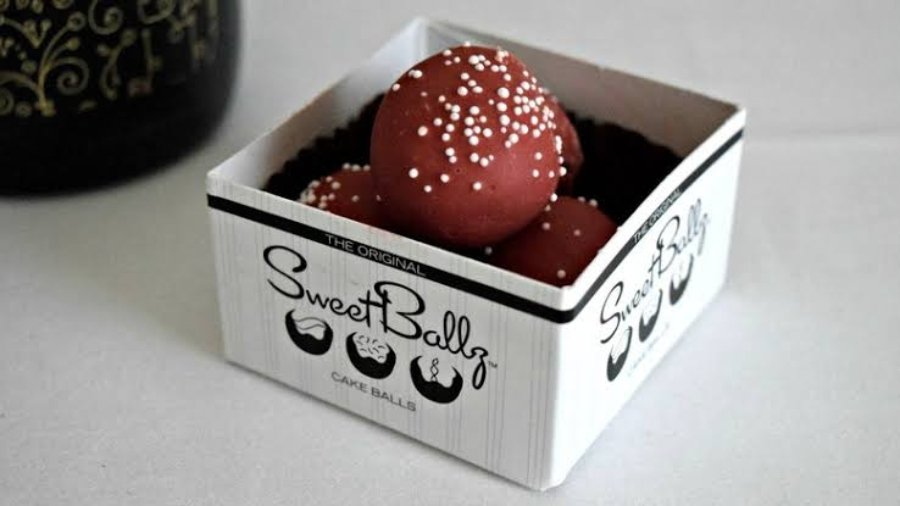
Sweet Ballz landed a deal with two Sharks on national television — then sued their own co-founder within a week of the episode airing. The investment never closed, the company split into two competing brands, and the website crashed under the weight of post-show orders. And yet, over a decade later, Sweet Ballz is still operating.
Here’s a clear breakdown of what happened during the pitch, why the deal collapsed, how the founders’ legal battle nearly destroyed everything, and where the business stands today in 2025.
What Sweet Ballz Pitched on Shark Tank
James McDonald and Cole Egger founded Sweet Ballz in Dallas, Texas. Their product was simple: chocolate-covered cake balls sold in multi-packs, targeted primarily at convenience stores like 7-Eleven.
The two appeared on the Season 5 premiere of Shark Tank in 2013. They were looking for capital to scale production and push their retail distribution further. The pitch worked on television — Mark Cuban and Barbara Corcoran offered $250,000 for 25% equity, and McDonald and Egger accepted the deal on air.
That’s where the straightforward part of the story ends.
The Founder Lawsuit That Derailed Everything
Within a week of the episode airing, McDonald filed a lawsuit against Egger and others. The allegations were serious: Egger reportedly made unilateral business decisions without McDonald’s consent and redirected Sweet Ballz website traffic to a competing site.
The legal dispute involved ownership of the Sweet Ballz website, the product itself, and the parent company, City View Food Group. A restraining order was sought as part of the litigation. SharkTankBlog covered the conflict in a post they aptly titled “Sour Ballz.”
As a direct result of the legal conflict, Cuban and Corcoran did not proceed with their investment. The deal that had been struck on national television never actually closed. McDonald eventually became the sole owner of Sweet Ballz after the dispute resolved — but the damage was already done.
It’s worth being clear: these were allegations made in litigation. The details here are reported neutrally, not as legal conclusions about who was at fault.
Two Brands, One Fight — How Sweet Ballz Split in Two
The founder dispute didn’t just kill the Shark deal. It produced two separate, competing businesses: Sweet Ballz and The Cake Ball Company, also known as Cake Ballz. For a period after the legal fallout, both entities were operating simultaneously.
Meanwhile, something else was happening. The moment the Shark Tank episode aired, the Sweet Ballz website was overwhelmed by order volume and crashed. The company had to pause orders and publicly apologized on Facebook to customers who couldn’t complete purchases. It’s a textbook example of the “Shark Tank effect” — massive sudden demand hitting a business that wasn’t built to handle it yet.
So Sweet Ballz was managing a website crash, a public relations mess, and a lawsuit at the same time. The combination nearly ended the brand. Eventually, the dust settled: Sweet Ballz survived, and Cake Ballz is now defunct.
How the Business Model Changed After Losing the Sharks
The original plan for Sweet Ballz was built around convenience store distribution, with 7-Eleven as a major target. That plan didn’t survive. Sweet Ballz has since confirmed that its products are no longer sold at 7-Eleven.
Losing that retail anchor forced a rethink. The business shifted toward two main channels: food-service distribution and co-packing, and direct-to-consumer online sales.
Food-Service and Co-Packing
Rather than pushing only its own branded product into retail stores, Sweet Ballz began supplying cake balls in bulk to other brands and institutional buyers. This is essentially a B2B model — acting as a manufacturer for other companies rather than competing for shelf space as a consumer brand. It’s a quieter business, but it’s more stable than depending on a single retail chain.
Seasonal Online Sales
Sweet Ballz also sells directly to consumers through its website, but not year-round. Online orders run from late fall through spring and pause during summer. The reason is practical: chocolate-covered cake balls don’t ship well in heat. Closing online sales during summer reduces product damage, customer complaints, and costly returns. It’s a straightforward quality-control decision.
The website at sweetballz.com sometimes shows a password-protected storefront or a “Sweet Ballz is taking a summer break” message, which has confused some customers — but it’s an intentional operational choice, not a sign the company has shut down.
Grocery Bakery Expansion
According to reporting from The Daily Meal, Sweet Ballz has plans to expand into grocery store in-store bakeries, with 2025 targeted as the window for that push. This is still a planned move, not a confirmed wide rollout, so it’s worth watching rather than assuming it has already happened.
Where Sweet Ballz Stands Today
The current product line includes birthday cake, chocolate, cookies and cream, lemon, and red velvet — with occasional limited flavors like salted caramel and spicy chocolate. Packages are sold in 15-count trays priced at around $30, with discounts available when ordering two or more trays.
Revenue estimates vary slightly by source. SharkTankBlog estimated annual revenue around $5 million as of late 2022. The Daily Meal puts the figure closer to $4 million per year in more recent reporting. These are estimates, not audited figures, but they consistently suggest the business is generating real revenue.
Social media activity went quiet after December 2020, which led some observers to assume the company had folded. But new posts appeared in November 2024, indicating the brand is still active. For a small food business focused heavily on B2B sales, social media silence doesn’t always mean the lights are off.
What Entrepreneurs Can Take Away From This
Sweet Ballz is often cited as a Shark Tank failure because the deal collapsed. That framing is incomplete. The company lost its investors, fought a public legal battle, lost its biggest retail partner, and still rebuilt to multi-million-dollar annual revenue. That’s not a failure story — it’s a messy survival story.
But there are real lessons here that are worth paying attention to:
- Founder agreements matter before you go public. McDonald and Egger pitched on national television without having solid alignment on decision-making authority, IP control, and website ownership. When things went wrong, there was no clear structure to contain the damage.
- Operational readiness has to match your marketing ambitions. Going on Shark Tank — or any high-visibility platform — without the infrastructure to handle a traffic and order spike is a preventable mistake. The website crash compounded an already bad situation.
- Single-channel distribution is a concentration risk. Sweet Ballz built its original model around 7-Eleven. When that relationship ended, there was no backup. The pivot to B2B food service and seasonal DTC took time that might not have been needed with a more diversified approach from the start.
- A failed investment deal isn’t the end of the business. Cuban and Corcoran walked away. Sweet Ballz found other ways to operate. Losing a high-profile investor is painful, but it doesn’t automatically mean the company is over.
For anyone tracking food startup case studies or following Shark Tank outcomes, Sweet Ballz is genuinely useful to study — not because it’s a perfect success, but because it shows what survival looks like when almost everything goes wrong at once.
If you’re researching other business turnarounds and startup lessons, Daily Business Zone covers practical business topics with the same no-fluff approach.
The Bottom Line
Sweet Ballz landed a Shark Tank deal, lost it to a founder lawsuit, split into two competing brands, lost its main retail partner, and still managed to build a business generating an estimated $4–5 million a year. The road was chaotic, but the company is still standing.
With grocery bakery expansion reportedly on the agenda for 2025 and online sales resuming each fall, Sweet Ballz is a small brand with a surprisingly durable track record — despite one of the messier post-Shark Tank histories on record.
Read Also: