
A small family business built around a simple but overlooked problem walked into Shark Tank asking for $75,000. They walked out with three Sharks and a deal worth nearly twice that amount. That business was Browndages—and what happened next is worth paying attention to.
This article covers who founded Browndages and why, how their pitch played out, what the deal actually meant, and where the company stands today.
The Problem Browndages Was Built to Solve
Founders Intisar Bashir and Rashid Mahdi noticed something most people with lighter skin tones never think about: standard “flesh-colored” bandages were designed for one skin tone, and it wasn’t theirs.
They wanted bandages that actually matched their skin—and their children’s skin. So they built them. Browndages offers adhesive bandages in multiple brown and darker skin tones, positioned around something real: representation in everyday health products.
This wasn’t just a novelty product. It filled a gap that millions of people had simply accepted as normal. Before appearing on Shark Tank, the business was direct-to-consumer and generating roughly $110,000 per month in online sales. That’s not a side project—that’s a real business with a real customer base.
How the Shark Tank Pitch Went
Browndages appeared on Season 13, Episode 20 of Shark Tank. The founders came in asking for $75,000 for 7.5% equity, implying a $1 million valuation.
Their pitch focused on what the business had already proven: consistent direct-to-consumer sales, strong word-of-mouth growth, and a clear underserved market. They weren’t pitching a concept—they were pitching a working business.
The response from the Sharks was competitive. Robert Herjavec passed. But Mark Cuban, Daymond John, and Lori Greiner all wanted in. That kind of multi-Shark interest doesn’t happen often, and it drove a real negotiation rather than a simple yes or no.
The final deal: $100,000 for 25% equity, plus a $75,000 line of credit. The founders accepted, bringing on three partners instead of one.
What the Deal Actually Meant for the Founders
On the surface, the founders gave up a lot more equity than they planned. They came in offering 7.5% and left giving up 25%. That’s a significant difference in ownership.
But the deal had real substance behind it. The $75,000 line of credit added working capital beyond the equity investment—useful for inventory and scaling operations. And three experienced partners bring more than money.
- Mark Cuban has strong direct-to-consumer and tech-enabled retail experience.
- Daymond John built a consumer brand from scratch and understands brand identity deeply.
- Lori Greiner specializes in consumer goods and has a proven track record moving products into retail.
Together, those three cover almost every growth challenge a young consumer product company faces. That’s not nothing.
This is a common Shark Tank dynamic: founders accept higher dilution to get more resources and strategic access. Whether it’s the right move depends on what the business actually needs. For Browndages, which was online-only and ready to scale, having partners with retail and branding experience made practical sense.
The lesson for other entrepreneurs is straightforward. Don’t evaluate a deal purely on the equity percentage. Evaluate what you’re getting in return and whether those resources can actually move the needle for your specific business.
Sales and Growth After the Episode Aired
The episode’s impact was immediate. Browndages recorded over $130,000 in sales within six days of the episode airing. To put that in context, they were doing around $110,000 per month before the show. They nearly matched that in less than a week.
Media coverage followed quickly. Forbes, ABC News, and other outlets picked up the story, extending visibility well beyond the episode itself. That kind of earned media compounds the initial TV exposure.
By 2022, the company had an estimated valuation of around $500,000 and between 11 and 50 employees—a meaningful step up from a family-run side project.
The sales spike is a good example of the “Shark Tank effect,” but it also highlights something less discussed: you have to be ready for it. If your website crashes, your inventory runs out, or your fulfillment falls apart, that spike turns into a wave of refunds and bad reviews. Operational readiness before an episode airs matters just as much as the pitch itself.
Where Browndages Stands Now — Products, Distribution, and Competition
Browndages is still in business and active as of 2026. The company has grown well beyond its original product.
The current product line includes:
- Skin-tone adhesive bandages in multiple brown shades
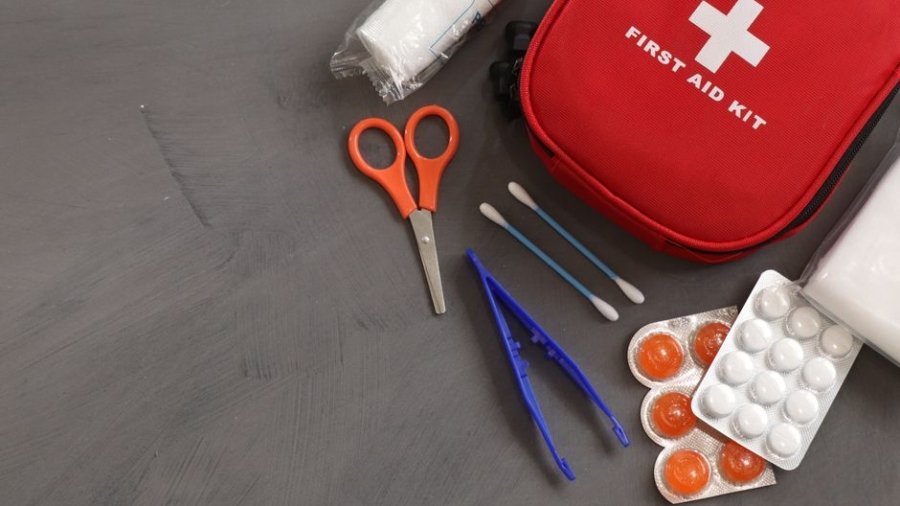
- First-aid kits
- Balms
- Pajamas
- Books featuring characters of color
- Branded apparel and product bundles
This expansion makes sense strategically. A customer who buys bandages for their kids and connects with the brand’s mission is a reasonable target for pajamas, books, and first-aid kits built around the same idea. It deepens loyalty and increases the value of each customer relationship.
Distribution has expanded beyond the company’s website. Products are now sold through salons, beauty suppliers, and pharmacies nationwide—a shift from fully online to a mix of channels.
The Competition Question
One real challenge Browndages faces is that larger brands noticed the same gap. Band-Aid and others have since introduced their own multi-tone bandage lines. These brands have massive distribution, marketing budgets, and shelf space that Browndages simply can’t match on volume.
Some critics have pointed to this as a fundamental weakness in the business model—if a big brand can copy your product, what’s your edge?
It’s a fair question, but it’s also not a complete picture. Browndages isn’t just selling a product; it’s selling a brand identity built around family, representation, and authenticity. The expanded product line—books, pajamas, character imagery—reinforces that positioning in ways a legacy bandage brand can’t easily replicate.
Many niche businesses face this same situation: a large competitor enters the space and competes on price and distribution. The businesses that survive are usually the ones that have built something more than a product—a community, a story, or a reason for customers to seek them out specifically.
Browndages appears to be working toward that kind of positioning. Whether it’s enough long-term remains to be seen, but the company is clearly not standing still.
Key Takeaways for Entrepreneurs
Browndages offers a few practical lessons worth keeping in mind:
- A clear, underserved market beats a clever idea every time. The product wasn’t complicated. The insight—that no one was making bandages for darker skin tones—was the real asset.
- Equity trade-offs should be evaluated against what you’re gaining. Giving up 25% to get three experienced Shark partners and a line of credit is very different from giving up 25% for just a check.
- Operational readiness is as important as the pitch. The $130,000 sales spike only works if you can actually fulfill those orders without falling apart.
- A single-product business is vulnerable. Browndages expanded early and deliberately, which makes the brand harder to replace with a generic competitor.
For anyone tracking consumer product businesses or niche brand-building, Browndages is a useful case study. You can find more business coverage and analysis like this at Daily Business Zone.
Final Thoughts
Browndages started with a straightforward observation: standard bandages don’t work for everyone, and nobody was fixing that. The founders built a real business around it, landed a competitive deal with three Sharks, and came out of the show with strong momentum.
The post-show growth has been solid. The product line is broader, distribution is wider, and the company is still running. The road ahead isn’t without challenges—big competitors are real—but Browndages has laid the groundwork to be more than a one-product story.
That’s not a small thing for a family-owned business that started by solving a problem most people had simply stopped noticing.
Read Also: