
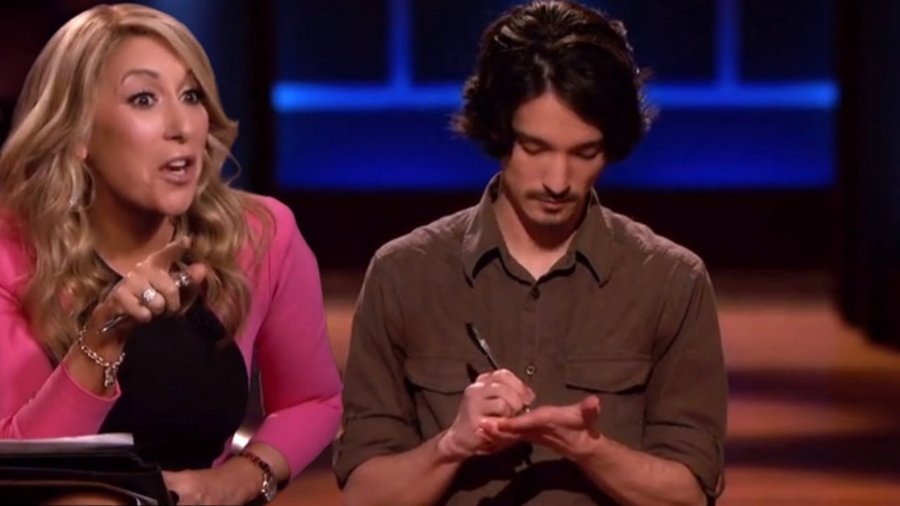
Windcatcher looked like it had everything going for it. A clever product, a live demo that genuinely impressed the Sharks, and a deal with Lori Greiner. By most measures, it was a Shark Tank success story in the making.
It didn’t turn out that way. The deal fell apart, a legal battle drained time and resources, and the founder was diagnosed with terminal cancer in his mid-30s. The company is now out of business.
Here’s a clear look at what Windcatcher was, what happened on the show, why things went wrong, and what other product entrepreneurs can take from this story.
What Windcatcher Was and How the Technology Worked
Ryan Frayne founded Windcatcher with a simple goal: make inflating an air mattress fast and easy — no pump, no electricity, no exhausting yourself blowing into a tiny valve.
The flagship product was the Windcatcher AirPad, a portable, packable air mattress priced at around $99.95. The real innovation wasn’t the mattress itself — it was the valve.
The valve used a fluid dynamics principle called entrainment. When a fast-moving stream of air passes through the valve, it pulls surrounding air along with it. This means each breath you exhale into the valve draws in far more air than your lungs actually produce.
You don’t even press your mouth against it. You hold your face a few inches away, exhale, and the valve does the rest. The mattress inflates in a handful of breaths.
A simple way to picture it: think about how blowing across the top of an open bottle creates a sound by pulling air upward, or how a chimney draft draws air from a room. A fast-moving stream of air creates a low-pressure zone that sucks in more air around it. The physics multiplies your effort.
During the Shark Tank pitch, Ryan claimed the valve inflated the AirPad roughly ten times faster than a conventional valve. For campers arriving at a site after dark, or parents at a beach without a pump, that’s a genuinely useful difference.
The Shark Tank Pitch and Lori Greiner’s Offer
Windcatcher appeared on Shark Tank Season 7. Ryan demonstrated the AirPad live on stage, which is exactly the kind of visual that works well on television — a mattress going from flat to inflated in seconds, with no pump in sight.
He came in asking for $200,000 in funding. Lori Greiner made the deal: $200,000 for 5% equity, plus a line of credit.
Lori’s interest wasn’t limited to the AirPad as a single product. She saw the valve technology itself as licensable across a wide range of outdoor and inflatable products. If that valve could be placed into sleeping pads, pool floats, camping furniture, and other gear made by established brands, the revenue potential was much larger than selling one SKU.
The appearance generated real attention. Media coverage picked up, and the product got in front of a large audience overnight. On the surface, it looked like a strong start.
Why the Deal with Lori Never Closed
This is where the story takes its first major turn. The on-air agreement did not survive due diligence. It was never finalized after filming.
The reason, according to post-show reporting, was a legal dispute. Cascade Designs, a larger outdoor gear company, raised claims over similar inflation technology and pursued litigation against Windcatcher.
From an investor’s standpoint, this kind of dispute changes the math completely. Lori’s interest was largely in licensing the valve. But if the core technology is legally contested, licensing deals become risky. Any company that licenses a technology caught up in IP litigation is taking on legal exposure along with the business opportunity. Most won’t do it.
This isn’t unusual in hardware startups. A contested patent can stop investment conversations faster than weak sales numbers. Investors need clean IP before they’ll commit to deals built around licensing.
It’s important to note that sources report a legal challenge and litigation — not a definitive ruling that Cascade Designs owned the technology. But the dispute alone was enough to create serious obstacles for Windcatcher.
Ryan reportedly spent significant time and resources dealing with the legal fight instead of growing the business. That’s a common and costly trap for founders who built something real but didn’t anticipate IP challenges from larger, better-funded competitors.
Ryan Frayne’s Illness and Its Effect on the Company
About two years after the Shark Tank appearance, Ryan Frayne was diagnosed with terminal pancreatic and liver cancer. He was in his mid-30s.
At that point, Windcatcher had reached roughly $4 million in revenue — a meaningful number for a product-stage startup still fighting a legal battle and operating without its Shark Tank deal. The company had clearly found real customers.
But Ryan was the center of the business. The technology, the relationships, the direction — it was all concentrated in one person. When his health deteriorated, the company lost its engine.
Ryan Frayne died in June 2018 at age 34.
This is one of the most underappreciated risks in early-stage startups. Investors, advisors, and founders spend a lot of time thinking about market risk, competition, and cash flow. Far fewer think about what happens if the founder gets sick. When a company’s institutional knowledge, external credibility, and internal leadership all live in one person, a health crisis can be as damaging as any business failure.
After Ryan’s death, a partner and friend attempted to revive Windcatcher through an Indiegogo crowdfunding campaign in 2019. It didn’t gain enough traction to sustain the business. Social media updates stopped around mid-2019. By early 2022, the website went dark.
Multiple sources that track Shark Tank companies confirm: Windcatcher is no longer in business.
What Product Entrepreneurs Can Learn From This
Windcatcher is frequently referenced in Shark Tank communities and business blogs, and for good reason. It’s a clean example of how multiple risks — legal, structural, and personal — can converge and bring down a company that had real traction.
A few practical takeaways:
- IP issues can kill investor deals fast. If your business model depends on licensing a technology, that technology needs clean, defensible IP before you start pitching. Legal disputes over core innovations don’t just slow things down — they can make your product unlicensable.
- Litigation is expensive in time, not just money. Ryan spent energy fighting Cascade Designs instead of building the business. For a small startup, a drawn-out legal battle against a larger company is a serious threat even if you’re in the right.
- Founder concentration is a real risk. Most early-stage companies are founder-dependent, and that’s often fine in the short term. But it’s worth thinking about documentation, key relationships, and whether anyone else in the company could keep things running in a crisis. Windcatcher had no clear answer to that question when it needed one most.
- A Shark Tank deal isn’t done until it’s done. The on-air handshake is the start of a process, not the end. Due diligence routinely changes or kills deals that looked certain on television.
- Licensing vs. selling is a strategic choice with different risk profiles. Lori saw the valve as a licensing play. That can be a smart path, but it requires airtight IP and willing partners. Selling direct requires different things. Windcatcher was caught between both without the legal foundation to execute either cleanly.
For more practical coverage of startup outcomes, business strategy, and entrepreneur stories, Daily Business Zone covers these topics in a straightforward, no-fluff format.
Where Things Stand Today
There is no active version of Windcatcher. The website has been down since around early 2022. The social media accounts have been inactive for years. No new ownership or product relaunch has emerged.
The AirPad is no longer available for purchase through any official channel. Whatever units exist are secondhand.
What remains is the story — a product that genuinely worked, a founder who built something real under difficult circumstances, and a set of business problems that proved too much to overcome together.
Ryan Frayne built a product people actually wanted to buy. He made it to $4 million in revenue while fighting a legal battle and dealing with an illness that would have stopped most people entirely. That’s worth acknowledging alongside the business lessons.
The company didn’t fail because the product was bad. It failed because the legal foundation was unstable, the investor deal couldn’t close, and the one person holding everything together ran out of time. That combination is hard to survive at any size.
Read Also: