
Dingle Dangle Shark Tank Update

Dingle Dangle Shark Tank Update: Did They Get a Deal?

Most baby products try to solve broad problems — sleep, feeding, development. Dingle Dangle solves one specific moment: the diaper change. That narrow focus is exactly what got it onto Shark Tank and in front of millions of viewers.

This article covers what the product does, who founded it, what happened during the Shark Tank pitch, whether a deal was made, and where the business stands today.

What Dingle Dangle Actually Does

Dingle Dangle is a baby product built around one simple idea: if you give a baby something interesting to look at, they stop squirming.

The product holds a sensory toy at eye level during diaper changes. The baby focuses on the toy instead of trying to roll away or kick. It is not a restraint — it is a distraction tool. Think of it as hanging a toy directly in a baby’s line of sight while you handle the diaper.

The design includes a headband with a removable flexible rod that positions the toy right where the baby can see it. The parent wears the headband, and the toy dangles in front of the baby during the change.

The product is also marketed as a baby gift item, which gives it a second sales angle beyond just solving a parenting problem. It is a niche, single-problem tool — not a broad baby-care product.

The Founders and the Idea Behind the Product

Dingle Dangle was founded by Stewart Gold and his business partner Mark Hamilton. The product was built around a real parenting frustration — the kind that comes from changing dozens of diapers a week and dealing with a baby who will not stay still.

Stewart Gold served as the primary spokesperson and led the Shark Tank pitch. The concept is straightforward: identify a repetitive daily problem parents face, build a simple physical product that addresses it, and find a market that pays for convenience and peace of mind.

That kind of specific problem-solving is actually a solid starting point for a consumer product business. The narrower the problem you solve, the easier it is to explain your product quickly — which matters a lot on a show like Shark Tank.

The Shark Tank Pitch and the Deal With Kevin O’Leary

Stewart Gold pitched Dingle Dangle on Shark Tank Season 15. Going into the pitch, the company had reported $67,000 in sales in 2022 and approximately $40,000 in sales in 2023 up to the time of filming. Those are modest numbers, but they show real market traction — customers were actually buying the product.

The pitch framed a common parenting pain point clearly. That clarity matters on Shark Tank. The Sharks can evaluate a product faster when the problem it solves is easy to understand and relate to.

Kevin O’Leary made a deal with Stewart Gold after the pitch. The specific deal terms — equity percentage and dollar amount — have not been verified through a primary source, so those details are not included here. What is confirmed is that Gold left with a deal and the national exposure that comes with it.

For founders watching from the outside, this was not a story of a company already operating at scale. It was a small product with early sales using national TV to accelerate growth. That is a legitimate strategy, and it is exactly how Shark Tank works best for early-stage consumer products.

The Unit Economics Behind the Product

For entrepreneurs evaluating niche physical products, Dingle Dangle is a useful example to look at closely.

The reported landed cost is approximately $14.50 to $15 per unit. The retail price is set at $40. That spread looks healthy on the surface. But landed cost is not the full picture.

Once you factor in marketing spend, shipping to customers, platform fees if you sell on Amazon or Shopify, and the cost of holding inventory, that margin tightens fast. A $25 gross margin per unit does not mean $25 in profit per unit.

The product also sold out quickly in early periods. That sounds like a good problem to have, and in some ways it is — it confirms demand. But for a small business, stockouts also mean lost sales, frustrated customers, and cash tied up in reorders. Inventory management becomes one of your biggest operational challenges when you are selling a physical product at this scale.

The takeaway for founders: a solid gross margin structure is a good starting point, but it does not automatically mean the business runs profitably. You have to model the full cost picture before drawing conclusions.

Where Dingle Dangle Stands Now

As of 2026, Dingle Dangle appears to still be operating. The website is active, social media accounts continue posting, and the product is available for purchase. That alone puts it ahead of many products that appear on Shark Tank and fade quickly after the episode airs.

A few notable post-show developments are worth mentioning.

First, the brand expanded beyond the original diaper-change product into baby clothing and accessories. That kind of product line expansion is a common move for small consumer brands that build an audience around a core item. It gives returning customers something new to buy and reduces dependence on a single SKU.

Second, a utility patent for Stewart Gold was reportedly granted in April 2024. A utility patent does not guarantee sales or market success, but it does provide IP protection — meaning competitors cannot copy the core product design without legal consequences. For a small brand competing in the baby products space, that is a meaningful defensive asset.

The overall picture is not a dramatic overnight success story. It is a small business that used Shark Tank exposure well, stayed active, added products, and secured legal protection for its original idea. For most niche consumer product founders, that is actually a realistic and respectable outcome.

If you follow small business news and want more updates on brands like this one, Daily Business Zone covers business stories with a practical lens for entrepreneurs and professionals.

What Founders Can Learn From the Dingle Dangle Story

Whether you are building a product or just watching how small consumer brands grow, Dingle Dangle offers a few clear lessons.

  • Narrow problems make strong pitches. A product that solves one specific, relatable problem is easier to explain and easier to sell.
  • Early sales matter more than a perfect pitch. Gold went into the Tank with real revenue. That gave him credibility and gave the Sharks something concrete to evaluate.
  • Gross margin is just the starting point. A product that costs $15 and sells for $40 sounds good — but you need to model the full operating cost before you know whether the business actually works financially.
  • Post-show activity determines long-term results. The Shark Tank appearance generates a spike. What you do after that — expanding products, protecting IP, staying visible — determines whether the brand lasts.

Dingle Dangle is not a billion-dollar brand. But it is a real product, solving a real problem, built by founders who took it from idea to national television and kept it going afterward. For early-stage founders, that is worth paying attention to.

Read Also:
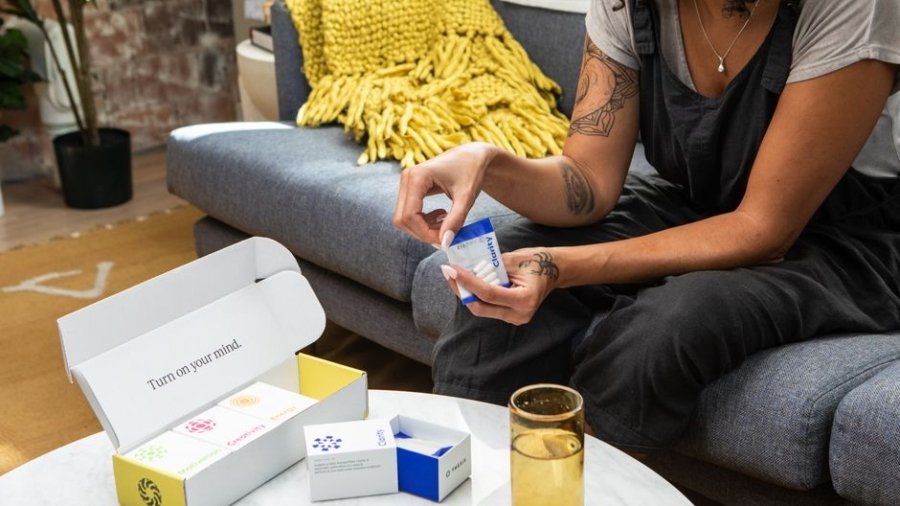
Cerebral Success Shark Tank Update

Cerebral Success Shark Tank Update: What Happened Next

Most products that appear on Shark Tank get a brief moment of attention and then quietly fade out. Cerebral Success followed that path — but the story of how it launched, rebranded, and eventually closed is worth understanding if you followed the pitch or are searching for the product today.

This article covers what Cerebral Success actually was, how the Shark Tank pitch went, what SmartX had to do with it, whether the business is still running, and what founder Trevor Hiltbrand moved on to after the show.

What Cerebral Success Was and Who Started It

Trevor Hiltbrand founded Cerebral Success as a brain supplement aimed primarily at students. The core idea was simple: help people focus better and maintain mental energy during demanding study sessions or workdays.

Hiltbrand reportedly drew from his own experience. He struggled to concentrate while in school and built the product concept around that problem. That kind of founder-origin story is common in the supplement space — someone identifies a personal pain point and turns it into a product.

To be clear about what Cerebral Success actually was: it was a dietary supplement, not a pharmaceutical. Think of it as a student productivity aid — similar in category to other nootropic-style products that were gaining popularity around that time. It was not a prescription drug, and it was not regulated or approved the same way medications are.

The Shark Tank Pitch

Hiltbrand pitched Cerebral Success on Season 5 of Shark Tank, in episode 522. The pitch followed a structure most viewers recognize: a founder with a personal story, a product he believed in, and a request for investment capital to grow the business.

The Sharks were not overwhelmingly sold on the concept. The pitch did generate attention — partly because brain supplements were a newer category at the time — but the reception from the investors reflected real skepticism about the product’s proof points and market positioning.

It is worth being direct here: a Shark Tank appearance does not validate a product. It brings visibility, and sometimes capital, but it does not confirm that the product works or that the business will survive. Cerebral Success is a good example of that. The TV moment did not translate into lasting commercial success.

Cerebral Success Became SmartX — Here Is What Changed

After the show, the brand went through a significant change. The product was relaunched under the name SmartX. If you searched for “SmartX” and ended up here wondering if it is related to Cerebral Success — yes, it is the same company.

SmartX was positioned around mental energy and focus, and it included an ingredient called Cognizin, a branded form of citicoline that has been used in other cognitive supplement products. The rebranding appeared to be a push toward a broader consumer market, moving beyond just college students.

Coverage from that period cited a small internal study to support SmartX’s claims. According to those reports, the study involved 10 subjects over seven days and produced the following self-reported or measured results:

  • 26% higher processing speed
  • 14% improvement in memory recall
  • 55% increase in focus

Those numbers sound impressive on paper. But it is important to say clearly: a study with 10 participants run over seven days is not a clinical trial. It is a very small internal test. The figures may reflect real results for those individuals, but they cannot be used as proof that the product reliably works across a general population. This kind of small-sample data is common in the supplement industry, and it should always be read with that context in mind.

The rebranding to SmartX seemed like a reasonable strategic move — new name, cleaner positioning, a branded ingredient to add credibility. But it did not save the business long term.

Is Cerebral Success Still in Business?

No. Cerebral Success and SmartX are no longer operating. You cannot buy the product online or in stores. The business has closed.

Different sources give different closure dates, and it is worth acknowledging that conflict openly. Some sources point to 2015 as the year the company effectively ended. Others suggest the brand continued in some form for longer, with at least one source noting the product was no longer available after 2024. Because the dates conflict and there is no single clear primary source confirming an exact shutdown, the most accurate thing to say is: the business eventually closed, and it is not active now.

If you are looking to buy SmartX today, you will not find an active storefront. The product is gone. Anyone still selling it would be working through old inventory, and there is no indication the brand is being relaunched.

This outcome is not unusual for supplement brands that get Shark Tank exposure. The show can drive a short-term spike in traffic and sales. But building a sustainable supplement business takes more than a TV appearance — it requires consistent distribution, strong margins, regulatory compliance, ongoing marketing, and customer retention. Not every founder has the infrastructure or resources to manage all of that after early momentum fades.

What Trevor Hiltbrand Did After the Show

Hiltbrand did not stay tied to the supplement industry after Cerebral Success wound down. Based on available coverage, he moved on to a different business entirely and became the CEO of Project Solar, a solar energy company.

That kind of pivot is more common than people expect. Founders who build their first company around a consumer product — especially in a crowded category like supplements — often take what they learned and apply it to a different industry. The skills involved in pitching, building a brand, and managing early-stage growth carry over even when the product does not.

It would not be accurate to say Hiltbrand’s career is defined by Cerebral Success at this point. Project Solar represents a completely different market, and that is where his focus appears to be now.

What This Story Actually Tells You

The Cerebral Success arc is a useful case study for anyone building a consumer product business. A few things stand out:

TV exposure is not a business model. Getting on Shark Tank creates a window of opportunity. It does not automatically create a viable long-term company. Many brands that appeared on the show — with or without a deal — eventually shut down.

Rebranding can signal strategy or desperation. The move from Cerebral Success to SmartX looked like a legitimate attempt to reposition for a bigger market. Whether the timing, resources, or execution were right is hard to say from the outside. But the rebrand alone was not enough to sustain the business.

Small studies are not proof of effectiveness. The supplement industry relies heavily on limited internal testing to make marketing claims. A 10-person study over seven days tells you very little about whether a product consistently works. Entrepreneurs and consumers both benefit from reading those figures carefully rather than taking them at face value.

If you follow Shark Tank updates regularly or track what happens to consumer brands after their pitch, Daily Business Zone covers this kind of business story with straightforward analysis, no hype.

Final Summary

Cerebral Success was a student-focused brain supplement founded by Trevor Hiltbrand and pitched on Season 5 of Shark Tank. The product later rebranded as SmartX, added a branded ingredient, and targeted a wider consumer audience. The business is now closed. You cannot buy SmartX or Cerebral Success anywhere today.

Hiltbrand has moved on and is currently associated with Project Solar, a solar energy company. The Cerebral Success story is not a dramatic failure — it is a fairly typical example of what happens when a consumer supplement brand gets early attention, goes through a repositioning, and ultimately does not find the traction it needs to last.

For anyone who was a customer or followed the brand, the short answer is: the product is gone, and the founder has moved on to something new.

Read Also:


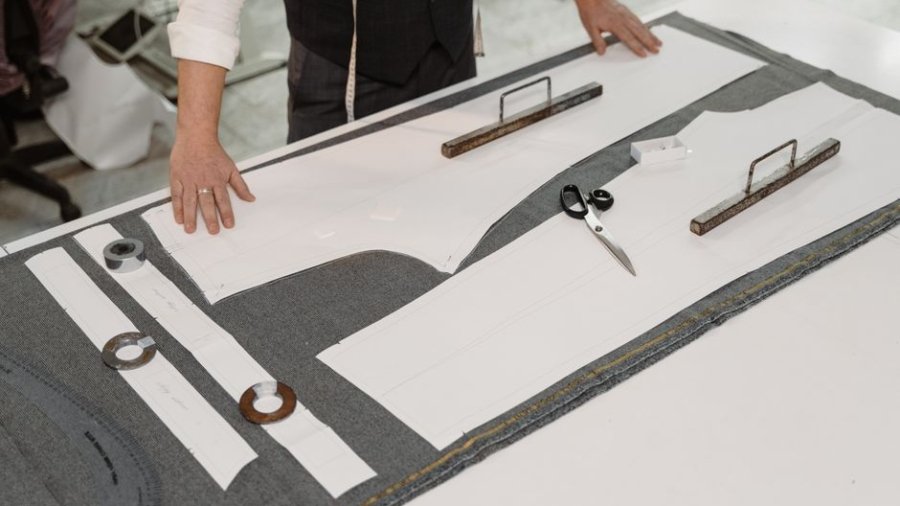
Mtailor Shark Tank Update

Mtailor Shark Tank Update: No Deal, Then What?

Most founders walk off the Shark Tank set either celebrating a deal or nursing a rejection. Miles Penn did something different — he walked away from an offer he didn’t like. That decision raised eyebrows at the time. A few years later, it looks like it might have been the right call.

This article covers exactly what happened during MTailor’s Shark Tank pitch, why Penn turned down the Sharks, how the company raised money afterward, and where the business stands today in terms of revenue, funding, and product line.

What MTailor Pitched on Shark Tank Season 7

MTailor appeared in Season 7, Episode 721. Founder Miles Penn pitched a smartphone app that uses computer vision to measure a customer’s body from a short video. The customer spins slowly in front of their phone camera, and the algorithm extracts their body dimensions using background subtraction.

The core claim was bold: MTailor said its app was 20% more accurate than a professional tailor. That figure is MTailor’s own marketing number — it has not been independently verified — and it drew immediate skepticism from the Sharks.

On pricing, the pitch made a clear case. Custom shirts through MTailor started at around $69. Traditional tailored shirts often run $125 to $150 or more. The value proposition was straightforward — custom clothing, measured by your phone, without an in-person appointment, at a lower price point.

Why Penn Turned Down the Sharks

This is the part most people searching for an MTailor update actually want to know. Did the Sharks say no, or did Penn walk away?

Penn walked away. The Sharks made offers, with discussions reportedly involving around $2.5 million at a valuation of approximately $25 million. Penn declined. The Sharks had already expressed concern about both the accuracy claims and whether the company’s valuation was justified at that stage.

Penn’s position appeared to center on protecting the company’s valuation and keeping control of the technology. Accepting unfavorable terms — especially around licensing — wasn’t something he was willing to do for the sake of a TV deal and the exposure that comes with it.

From a business standpoint, this is an interesting case. A lot of founders treat a Shark Tank offer as a lifeline. Penn treated it as a negotiation he wasn’t willing to lose ground on. Whether that was the right move depends on what happened next.

How MTailor Raised Money After the Show

Walking away from Shark Tank without a deal doesn’t automatically mean a company runs out of options. MTailor proved that.

After the show, Penn pursued venture capital on his own terms. MTailor raised $7.2 million in 2018, followed by another $8.3 million in January 2022. That puts total VC funding at approximately $15.5 million across two rounds.

Co-founder Rafi Witten departed the company in 2019. Penn continued leading MTailor through both funding rounds and the company’s expansion phase.

MTailor also uses its Shark Tank history as a credibility signal. The company’s investor landing page references the Shark Tank appearance alongside its patented AI body-scanning technology, positioning MTailor as a tech firm that happened to start with a TV pitch — not a reality TV brand that stumbled into apparel.

The fact that MTailor was able to raise over $15 million from venture investors after declining a Shark Tank deal suggests that Penn’s valuation instincts weren’t entirely off base. Investors who came in later apparently agreed that the company was worth more than what the Sharks were willing to pay for.

MTailor’s Revenue, Valuation, and Product Line Today

As of April 2024 reporting from SharkTankBlog and BGR, MTailor was generating approximately $13 million in annual sales and carried a valuation of around $25 million. These are the most recent figures available — not real-time data — so treat them as a benchmark rather than a live snapshot.

The company has reportedly sold over 100,000 custom clothing items, which is a reasonable signal that this isn’t a niche product with a tiny customer base. It’s an actual business with real volume.

What MTailor Sells Now

The product line has expanded well beyond the original men’s dress shirt. MTailor now offers:

  • Men’s custom shirts
  • Men’s suits
  • Men’s jeans and chinos
  • Men’s tees
  • Women’s jeans

Some prices are actually lower today than they were during the Shark Tank pitch. For a business that competes on making custom clothing accessible, that’s a meaningful detail.

App Ratings and Customer Reception

The MTailor app holds a 4.6 out of 5 rating on iOS based on roughly 5,000 reviews, and a 4.1 out of 5 on Google Play based on around 2,000 reviews. Those numbers are solid for a service that depends on customers trusting an algorithm with their measurements.

In October 2023, The New York Times ran a feature that included MTailor. The coverage was generally positive on fit, though it noted the shirts ran “comically long.” MTailor also appeared in a Business Insider 2025 roundup of the best white dress shirts for men. Neither piece reads like a brand struggling to stay relevant.

One thing worth noting: MTailor’s social media presence has been largely quiet since around 2021. Instagram and Twitter accounts have seen minimal activity, and Facebook updates have been sparse. For some businesses, that would be a warning sign. Here, though, the app is still active, the website is live, products are shipping, and media coverage continues. Quiet social feeds don’t always mean a quiet business.

Is the 20% Accuracy Claim Worth Taking Seriously?

This is a question a lot of potential customers ask. MTailor has always leaned on this figure — 20% more accurate than a professional tailor — as a core part of its pitch. The Sharks pushed back on it in the tank, and there’s no independent study that validates it publicly.

What the reviews do suggest is that the fit is good enough for most customers to be satisfied. The NYT review flagged shirt length as an issue, which points to the reality that algorithmic measurements aren’t perfect. But for people who struggle with off-the-rack sizing — shirts too tight in the chest, too loose everywhere else — a custom-measured garment at $69 is still a practical option, even if it occasionally needs minor tweaking.

The comparison to traditional tailoring is less about which is more accurate in a clinical sense, and more about what a customer gets for their money and time. MTailor’s measurement process takes roughly 15 seconds. A traditional tailoring appointment takes considerably longer and costs more. That trade-off is what MTailor is actually selling.

What This Means for Founders Watching from the Outside

The MTailor story is a useful business case for any founder who’s debating whether to take a high-profile but unfavorable deal.

Penn’s decision wasn’t reckless. He had a clear view of what his company was worth and didn’t want to dilute it — or hand over licensing terms — for the sake of a Shark Tank check and the brand association that comes with it. He left the tank without a deal and went out and raised $15.5 million in venture capital over the next several years.

That doesn’t mean walking away from every deal is smart. It means having enough conviction in your valuation and enough options to pursue that you don’t have to accept terms that undermine what you’re building. Penn had that. Not every founder does.

If you’re running a business and thinking through funding decisions, resources like Daily Business Zone cover practical startup and growth topics that are worth keeping on your radar.

Where MTailor Stands Today

MTailor didn’t need a Shark Tank deal to survive. It raised its own capital, expanded its product line, maintained solid app ratings, and continued generating revenue that, as of 2024 reporting, sits around $13 million annually.

The business operates in a real niche: people who want custom-fit clothing without the time or cost of traditional tailoring. The app makes that process fast and relatively affordable. The technology isn’t flawless, but it’s good enough that customers keep buying and reviewers keep covering it.

Miles Penn left the Shark Tank set without a deal and without a partner. What he kept was control, valuation, and a company that’s still running nearly a decade later. For a lot of founders, that’s a better outcome than the alternative.

Read Also: